The Chinese year of the rat begins on 7th Feb 2008. This would be year 4706 in the Chinese calendar.
As you may know, the Chinese years are divided into a twelve year cycle, 2008 is the year of the rat.
The Chinese believe that people born in a particular year take on the characteristics of the animal associated with that year.
2008 Rats:
Rats are devoted to their family. Hard-working and imaginative. Yes rats are always smart and go-getting.
Zodiac:
Another dimension of the Chinese zodiac is 5 elements, metal, water, wood, fire and earth.
If the year ends in 0 it is Yang Metal.
If the year ends in 1 it is Yin Metal.
If the year ends in 2 it is Yang Water.
If the year ends in 3 it is Yin Water.
If the year ends in 4 it is Yang Wood.
If the year ends in 5 it is Yin Wood.
If the year ends in 6 it is Yang Fire.
If the year ends in 7 it is Yin Fire.
If the year ends in 8 it is Yang Earth. If the year ends in 9 it is Yin Earth.
Together with the animals, the elements combine to give a 60 year cycle of Chinese years. Before 2008, the previous year to give the combination of Rat and Yang Earth was 1948. (子 戊 )
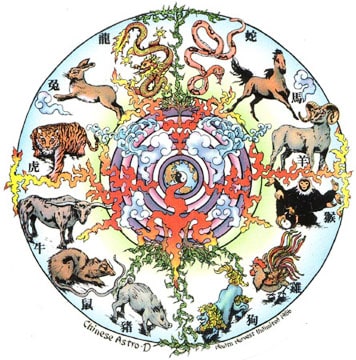
Ox Tiger Hare Dragon Snake Horse Sheep Monkey Rooster Dog Pig Rat
2009 2010 2011 2012 2013 2014 2015 (2004) (2005) (2006) (2007) 2008
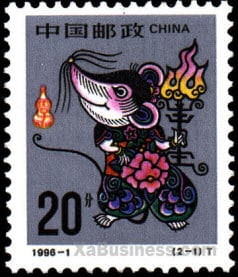
1996 Year of the rat
Chinese Phrases
搞笑清洁笑话 in China roughly translate into clean funny jokes.
Chinese Characters
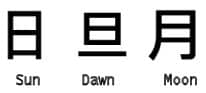
A simple example of Chinese characters showing how the sun symbol can be modified with a line to mean dawn.
See here for 2007 – Year of the pig
P.S. Please write to Will and Guy if you have any examples of Chinese New Year humor
Year of the Tiger (2010)
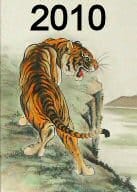
The Chinese New Year 2010 Begins on February 14th.
What Chinese New Year Animal for 2010? 庚寅
2010 is the Chinese year of the Tiger. Specifically, this is the year of Gēng-yín 庚寅 (Metal Tiger). Here is a list of animals which answer the question: What Chinese New Year?
Calculating ‘What is Chinese New Year Animal’
The fact that the date of Chinese New Year varies within about a month is a clue that it’s linked to the new moon. A rough, guide is that the Chinese New Year falls on the second new moon after the shortest day. The winter solstice always falls on December 21st, the next new moon is January 15th, and the second new moon February 14th 2010.
If the year ends in 0 it is Yang Metal.
If the year ends in 1 it is Yin Metal.
If the year ends in 2 it is Yang Water.
If the year ends in 3 it is Yin Water.
If the year ends in 4 it is Yang Wood. If the year ends in 5 it is Yin Wood.
If the year ends in 6 it is Yang Fire.
If the year ends in 7 it is Yin Fire.
If the year ends in 8 it is Yang Earth.
Wishing Tree For Chinese New Year 2010
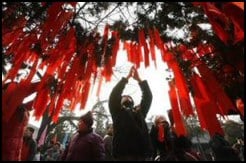
A man ties his New Year wish to a “wishing tree” at the White Cloud Temple, Beijing, on the day of Chinese New Year. See image to the right.
A child in traditional costume takes part in the Chinese New Year celebrations at the Dongyue temple, Beijing, China. The Lunar New Year is be marked with a week-long holiday.
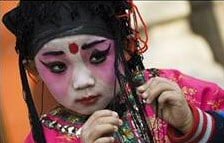
Chinese New Year Masks
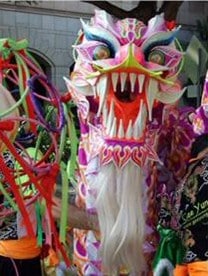
Masks in Chinese culture are part and parcel of the world culture of masks……. 面具 Mianju. Masks first appeared in China during the Shang dynasty over 3,500 years ago. The colourful and exciting celebrations for the Chinese New Year last for many days, and end with the famous lantern festival.
Examples of Chinese Script
The development of Chinese characters can be dated back to about 4,500 years as discovered at Yanghe, Shandong Province in recent years. There are about a dozen pottery wine vessels unearthed, which have a character each. Those characters are quite close to the oracle inscriptions carved by the ancients of the Shang Dynasty [16th to 11th century B. C.].
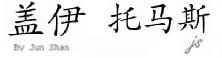
Here is the Chinese name for Guy Thomas
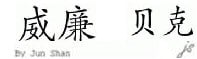
Here below is the Chinese name for William Baker
English Words Borrowed from Chinese
Words taken completely or in part from another language are known as loanwords. In the English language, there are many loanwords that have been borrowed from Chinese languages and dialects. Here are ten common English words that are borrowed from Chinese.
- Coolie: While some claim that this term has its origins in Hindi, it’s been argued that it could also have origins in the Chinese term for hard work or 苦力 (kǔ lì) which is literally translated as “bitter labour.”
- Gung Ho: The term has its origins in the Chinese word 工合 (gōng hé) that can either mean to work together, or as an adjective to describe someone that is overly excited or too enthusiastic. The term gong he is a shortened word for industrial cooperatives which were created in China in the 1930s. During that time U.S. Marines adopted the term to mean someone with a can-do attitude.
- Chop Chop: This term is said to originate from the Cantonese dialect for the word 快快 (kuài kuài) which is said to urge someone to hurry up. Kuai means hurry in Chinese. “Chop Chop” appeared in English-language newspapers printed in China by foreign settlers as early as the 1800s.
Shanghai, China 2010: World Expo
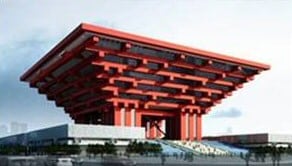
World Expositions are galleries of human inspirations and thoughts. Since the Great Exhibition of 1851 was held at Crystal Palace, London, the World Expositions have attained increasing prominence as grand events for economic, scientific, technological and cultural exchanges, serving as an important platform for displaying historical experience, exchanging innovative ideas, demonstrating esprit de corps and looking to the future.
The picture to the right is an Artist’s impression of the China Pavilion
Expo2010 will take place in Shanghai, China. Will and Guy would like to share with readers what can be expected at this 2010 exposition.
- It will take place in Shanghai, China.
- While the Chinese New Year in 2010 begins on February 14th, the Expo starts on 1st May 2010 and runs until 31st October 2010.
- 100 million visitors are expected to attend.
- There are already 194 participants signed up to display their exhibits
- theme of Expo 2010 is “Better City, Better Life,” representing the common wish of the whole humankind for a better living in future urban environments.
- This emblem, depicts the image of three people: you, me, him/her holding hands together, symbolizing the big family of mankind.
- See here the Marvellous pavilions which have been, and are being built. We are pleased to report that they will use solar energy.
- Watch the promotional Expo 2010 video here
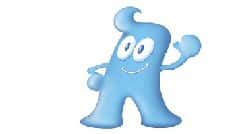
- Created from a Chinese character meaning people, the mascot “Haibao” embodies the character of Chinese culture. See the lovely Haibao character below.
Please write to Will and Guy if you have any information about ‘What is Chinese New Year’.
Traditional Foods
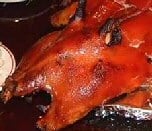
On this page we give you a flavour of traditional Chinese foods, together with the culture that accompanies this Lunar New Year festival.
China: Food Feast
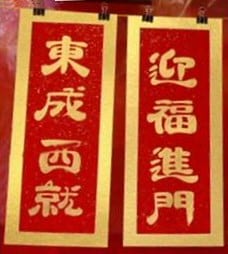
The Chinese New Year is a time for families to reunite, not only to welcome in the new lunar year, but also to feast together and wish each other good fortune. Preparations for this traditional occasion often begin the month before. Homes are swept and cleaned from top-to-bottom to rid the home of any bad luck that may cling and carry over to the New Year.
Red paper fortune scrolls, on which prosperous greetings and blessings are written, are put up around the home to ensure the household has an auspicious New Year.
New clothes and shoes may be bought, and hair cut to symbolise a fresh start. After these preliminary preparations, the focus shifts onto the food that will be eaten and served over the Spring Festival.
Traditional Chinese New Year Food Menus
Many new year dishes are served “whole”; such as whole fish, or whole chicken or duck, this is because the action of slicing and cutting carries bad connotations, like severing family ties.
At New Year, a special emphasis is placed on the symbols represented by different foods. Here is what we have discovered about what these traditional foods represent:
- Bamboo shoots: Wealth.
- Black moss seaweed: Wealth.
- Chicken: Represents happiness and marriage.
- Dried Bean Curd: Happiness.
- Eggs: Fertility.
- Egg Rolls: Wealth.
- Fish served *whole: Prosperity
- Chinese garlic chives: Everlasting, a long life.
- Lychee nuts: Close family ties.
- Noodles: Represent a long life.
- Oranges: Wealth.
- Peanuts: A long life.
- Pomelo: Abundance, prosperity, having children. (Pomelo is a citrus fruit native to SE Asia.)
- Seeds, e.g. lotus or watermelon seeds: Having a large number of children.
- Tangerines: Good luck.
* Whole fish is often seen on the menu, as the Chinese adage ‘nian nian you yu’ in Mandarin, or ‘neen neen yau yu’ in Cantonese, which translates as ‘may you have abundance every year’.
Togetherness Food Tray
When visiting relatives, it’s customary for them to offer guests tea, along with a round or octagonal tray filled with a variety of treats, from nuts to sweets. This is known as “chyuhn haap”, or the Tray of Togetherness.
Traditionally, the tray is made of wood, with eight interior dishes of porcelain, but nowadays many people opt for plastic. Will and Guy have seen ones constructed from rosewood, which is very special. The tray usually contains an inner set of eight compartments to help keep the goodies separated. Each compartment is filled with a special symbolic food. In such a tray one might find: candied ginkgo nuts, red melon seeds, candied ginger slices, candied water chestnut, candied carrot and candied lotus root.
Guy’s favourite here is the water chestnut; while Will preferred the candied carrot.
The Foods Eaten At Chinese New Year Vary Between Regions
Northern Chinese, for example, will ring in the new year by making and eating dumplings -“jiaozi”, as their shape resembles gold ingots. The name “jiaozi” also sounds like the word for China’s earliest form of paper money, so dumplings are thought to bring wealth to those who eat them.
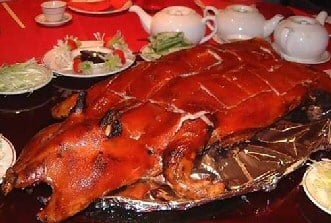
In the southern regions of China and Hong Kong, common celebration dishes are turnip cake – “loh bak go” and new year cake “neen go”. Traditionally, these were made in the home and then given to relatives as a token of love and respect, though the abundance of ready-made turnip and new year cakes in supermarkets and restaurants means that the laborious process of making these new year foods at home has largely been eliminated.
In walled village communities of China a fabulous meal called “poon choi” is created. This particularly appeals to Will and Guy as you can see when you read the ingredients. It is a hearty feast, often consisting of: pork, chicken, beef, duck, prawns, tofu, abalone*, dried mushrooms, Chinese radish, layered on top of one another and usually braised and presented in a wooden bowl from which all can share the food. The custom is for diners to help themselves to the food in the bowl, and the eating of “poon choi” is a communal activity and is considered important for family relations.
* Edible sea-snails [Will is not quite so keen now.]
I could pig-out on that crackling’, says Guy.
Food Specialities from the Regions of China
- Hunan dishes include spicy frogs’ legs, tripe and sea cucumbers.
- People from Sichuan eat duck intestines, pig brains, frog’s thighs, green bean seeds and rabbit ears.
- In Qinghai you can find sheep vein, yak vein, caterpillar fungus, a seaweed-like black moss known as “hair grass,” and stir-fried camel’s foot.
- Among the dishes one can find in Harbin are “yellow flower” (chopped lily stalks), grilled bear paw, stewed moose nose with mushrooms, white fungus soup, and monkey-leg mushrooms.
- In Manchuria, frog oil taken from frog ovaries is often added to soups and stews served at expensive restaurants.
- Yunnan favourites include live goat foetus, caterpillar fungus, three-year cured ham, fried goat cheese, and deep fried bee larvae.
- Delicacies from Hubei Province include snake meat, venison from spotted deer, soft-shell turtle and crocodile claw.
- Cobra-bile wine is consumed in Canton.
- People in Beijing like ant soup.
- Dog, known as “fragrant meat,” has long been a popular food in northeast and southern China and in recent years has become popular in other places.
Chinese New Year Lantern Festival
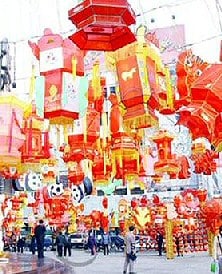
The Chinese Lantern Festival has a rich heritage. There are many wonderful stories about how the Lantern Festival first began. One story is that in ancient times, people would go in search of spirits with burning sticks. They thought the spirits could be seen during a full moon.
Chinese New Year Masks
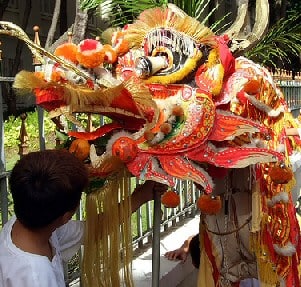
The Chinese masks that you see during the Chinese New Year Lantern Festival are exclusively used during that time of the year only. The general feeling generated by the Chinese masks during this festive season is that of happiness and joy.
Please write to Will and Guy if you have any pictures of traditional Chinese New Year foods.
Lantern Festival
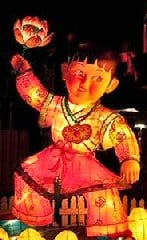
This particular holiday is called Yuan-Xiao, and it is celebrated 15 days after the start of the Chinese New Year, the night of February 17/18th 2011.
Chinese New Year Lantern Festival
The Lantern Festival in China is very old; legend has it that there are many wonderful stories about how the Lantern Festival first began. One story is that in ancient times, people would go in search of spirits with burning sticks. They thought the spirits could be seen during a full moon.
Another is about a lonely young girl, in Han times, who tricked an emperor into having a wonderful festival just so she could visit her family. The emperor apparently had such an excellent time, he decided to make this festival an annual event.
According to one legend, from ancient times, a celestial swan came into the mortal world where it was shot down by a hunter. The Jade Emperor, the highest god in Heaven, vowed to avenge the swan. He started making plans to send a troop of celestial soldiers and generals to Earth on the fifteenth day of the first lunar month, with orders to incinerate all humans and animals.
However, the other celestial beings disagreed with this course of action, and risked their lives to warn the people of Earth. As a result, before and after the fifteenth day of the first month, every family hung red lanterns outside their doors and set off firecrackers and fireworks, giving the impression that their homes were already burning. By successfully tricking the Jade Emperor in this way, humanity was saved from extermination.
By T’ang times, many families simply set aside one evening, during the first full moon after the new year, to honour the moon. They would sit outside, and gaze up, in awe and delight.
Chinese New Year Lanterns
Stunningly beautiful lanterns from cities as wide apart as New York, London and Beijing.
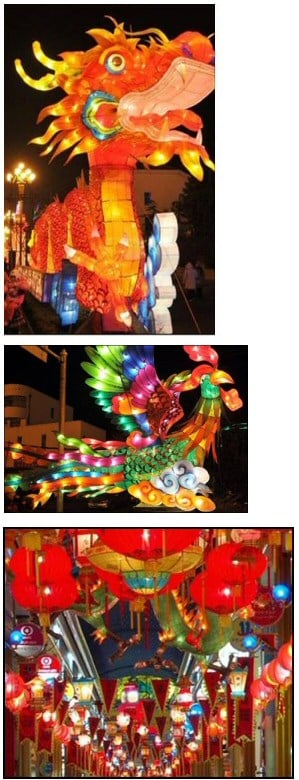
Lanterns Add to the New Year Festive Atmosphere
Today, people wear white in honour of the moon, lanterns are hung in the malls and markets, and children carry paper lanterns to school, to light their way to a bright and happy future.
The lantern displays can be found in the town centres, the squares and temples. In China there is often a lantern competition at the temple. Traditional lanterns are made of paper. They can make the lamps turn by the heat circulation from the candle inside.
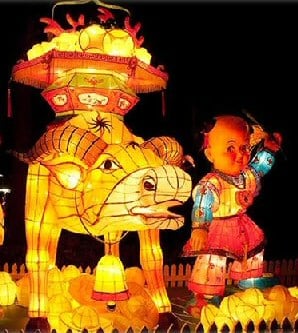
Today the light of the lamp comes mostly from electricity. People like to design for the Chinese New Year Lantern Festival by using zodiac animals, historical figures, saint and gods of Taoism or Buddhism. Certainly, the current year’s animal symbol of the Chinese calendar is most popular subject. Using a computer they can now design the lantern with different movements, the different colours of light and even using the laser light with special visual and sound effects.
The Lantern Festival is also referred to as the Yuan-Xiao Festival. This is because Chinese eat Yuan-Xiao on this day. This custom originated from the Eastern Jin Dynasty in the fourth century and then became popular during the Tang and Song Dynasty.
Yuan-Xiao is Similar to Tang-Yuan
They consist of sweet rice flour and are made into sticky glutinous balls. These can then be filled in with sesame, red-bean or peanut butter paste. Usually, they are served with sugar water; although some people still make a salty Tang-Yuan.
The difference between Yuan-Xiao and Tang-Yuan is the way they are made and cooked. This is because that Chinese in different geographic areas prepare the food in different ways. The Chinese people call the one they eat on Winter Solstice Day, Tang-Yuan. The one they eat on the Lantern festival is called Yuan-Xiao.
Chinese New Year Lantern Festival Held in London, England 2009
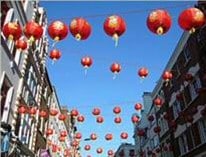
The traditional food for the Chinese Lantern Festival is Yuanxiao dumplings, named after the lonely palace maid of long ago. [Some versions of the story have her preparing stuffed dumplings for the God of Fire, as this was one of his favourite foods]. Yuanxiao are made with sticky rice flour. They can be sweet or savoury; filled with everything from sugar, walnuts, and dried tangerine peel to meat and vegetables. Incidentally, lanterns are widely used on China Day.
Chinese New Year Masks
The Chinese masks that you see during the Chinese New Year Lantern Festival are exclusively used during that time of the year only. The general feeling generated by the Chinese masks during this festive season is that of happiness and joy.
Wishing Tree for the New Year
A man ties a New Year wish to a “wishing tree” at the Taoist White Cloud Temple, Beijing, on the day of Chinese New Year
A child in traditional costume takes part in the third day of Chinese New Year celebrations at the Dongyue temple, Beijing, China. The Lunar New Year will be marked with a week-long holiday.
Zhongqiu jie – Mid-autumn Moon Festival
This is the Mid-Autumn Festival 中秋節 which is held on the 15th day of the eighth month in the Chinese calendar, which is usually around late September or early October in the Gregorian calendar. It is a date that parallels the autumnal equinox of the solar calendar, when the moon is supposedly at its fullest and roundest. The traditional food of this festival is the moon cake, of which there are many different varieties.
Please write to Will and Guy if you have any pictures of Chinese New Year lanterns.
Masks

Today Chinese masks are most popularly featured in two main aspects of the Chinese culture; the Chinese New Year celebrations and Chinese opera performances.
Chinese New Year Masks
Masks in Chinese culture are part and parcel of the world culture of masks……. 面具 Mianju. Masks first appeared in China during the Shang and Zhou dynasty some 3,500 years ago. The colourful and exciting celebrations for the Chinese New Year last for several days and end with the lantern [Yuanxiao] festival.
The Chinese masks that surface during the New Year season are exclusively used during that time of the year only. The general feeling generated by the Chinese masks during this festive season is that of happiness and joy. Will and Guy share with you some of the multitude of masks which abound in Chinese culture
Materials in Chinese New Year Masks
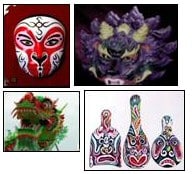
A Chinese New Year Mask can be made of materials including cloth, paper, grass, leather, metal, shell, and carved of stone or wood. They are painted with Chinese symbolic designs and vivid colours. Some masks have realistic human or animal features like lion or dragon, while others provide a grotesque appearance. Red is considered as a lucky colour for Chinese people, therefore there are lots of red masks worn during the celebrations of New Year. Chinese New Year Masks are amongst the best creations in the art world and are highly sought after by collectors.
You can see these masks in museums and art galleries in many parts of the world. Chinese New Year is swathed in beliefs of gods, spirits of ancestors, legendary beings, good and or evil, the dead, animal spirits, and other beings believed to have supreme power over humanity. Masks featuring such supreme powers are honoured and are worn during the rituals surrounding the Chinese New Year like the Chinese new year dragon dance or lion dance. Chinese New Year Masks are also hung around the home as decoration.
Chinese New Year Masks reflect the feelings and emotions of merriment associated with this festival. Chinese people all over the world usher in the New Year by cooking special food, cleaning their homes, purchasing new clothes and buying presents for friends and family. In the midst of all these activities, various artworks like Chinese New Year Masks in rich colours display the essence of the festivity.
Chinese Opera Masks
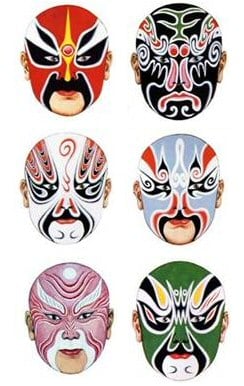
Chinese opera masks are painted on to the faces of the performers. The masks seek to describe the character that each performer is meant to play in the performance. Some are applied by professional make-up artists, but mostly by the actors themselves. There are all sorts of combinations of design and colour and often they are very beautiful report Will and Guy.
Here we provide a guide to the meaning and significance of the colours that can be seen on Chinese opera masks:
- Red colour represents loyalty; courage; righteousness.
- Black colour represents outspokenness; straightforwardness; fairness and justice as well as sincerity.
- White colour represents cunningness; craftiness; treacherousness.
- Blue is characterised as stubborn, intractable and someone who shows valour.
- A green mask wearer might also be brave and brutal.
- Wearers of a purple mask are thought to be loyal, honest and upright citizens.
- Green or Blue colours can also represent characters who are boorish; rude; crude.
The colours of the masks and the type of designs used help us to comprehend and understand the characters in the Chinese opera much better. Occasionally, just by looking at the design used, it can be seen that this is the hero in the opera or the villain, whether this is a general or an ordinary soldier, whether the character is aggressive or friendly.
Traditional Masks
Masks are an age-old cultural phenomenon shared by all ethnic groups of China. In awe of the unknown world, ancient people created numerous totems and divinities, praying to them for the power to overcome disasters and protect their lives.
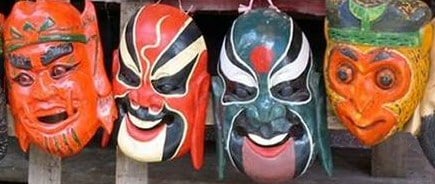
Traditional Chinese masks served as a carrier of such wishes. They were given the functions of communicating with gods, bringing blessings, driving away ghosts and warding off diseases and lots of sacrificial rituals involving masks were regularly held.
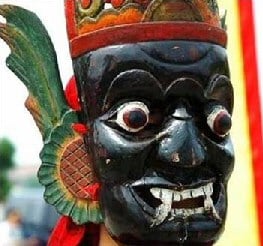
Chinese Exorcising Masks
These Chinese exorcising masks were used to frighten away evil spirits. The masks were made to appear as grotesque as possible to scare away the evil spirits. Exorcising rituals were performed once a month but due to scientific discoveries exorcism now is used as a means of entertainment.
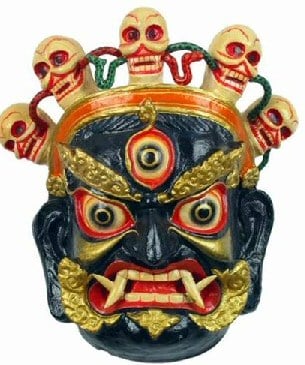
Tibetan Masks
Tibetan masks Tibetan Masks are masks worn by monastery and folk sorcerers and those used in Tibetan operas and play a large part in Tibetan culture.
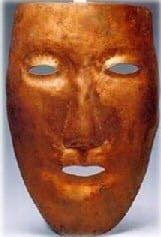
Shamanic Masks
Shamanic masks are exorcising and funeral masks derived from the totem worshipping of ethnic minorities in north China and the shamanic culture.
Wishing Tree for the New Year
A man ties a New Year wish to a “wishing tree” at the Taoist White Cloud Temple, Beijing, on the day of Chinese New Year
A child in traditional costume takes part in the third day of Chinese New Year celebrations at the Dongyue temple, Beijing, China. The Lunar New Year will be marked with a week-long holiday.
Lanterns Add to the New Year Festive Atmosphere
Today, people wear white in honour of the moon, lanterns are hung in the malls and markets, and children carry paper lanterns to school, to light their way to a bright and happy future.
The lantern displays can be found in the town centres, the squares and temples. In China there is often a lantern competition at the temple. Traditional lanterns are made of paper. They can make the lantern turn by the heat circulation from the candle inside.
Today the light of the lantern is mostly from electricity. People like to design lantern using zodiac animals, historical figures, saint and gods of Taoism or Buddhism. Certainly, the current year’s animal symbol of the Chinese calendar is most popular subject. Using a computer they can now design the lantern with different movements, the different colours of light and even using the laser light with special visual and sound effects.
The Lantern Festival is also referred to as the Yuan-Xiao Festival. This is because Chinese eat Yuan-Xiao on this day. This custom originated from the Eastern Jin Dynasty in the fourth century and then became popular during the Tang and Song Dynasty.
The Colour Red and Fireworks
Please write to Will and Guy if you have a good example of a Chinese mask for New Year or the opera.
Year of the Pig (2007)


In 2007 February 18th was the first day of the Chinese New Year. The Chinese have been calculating the New Year for a long time (over 4,600 years), thus it is understandable that their ancestors used the new moon to fix the date of each new year.
Special Chinese New Year Stamps
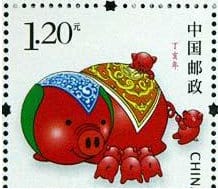
These stamps, which celebrate the Year of the Pig have been made to taste of sweet and sour pork. The stamps are official issue to celebrate the Chinese New Year.
If you scratch the surface of the front or the back, the stamp releases the smell of a popular Chinese dish. The stamps are on sale in China ahead of their New Year on February 18.
Incidentally, the Royal Mail launched Britain’s first scratch ‘n’ sniff stamp in 2001, the stamp exuded an aroma of eucalyptus.
Here on the left is a Chinese New Year stamp of a pig taken from the previous cycle (1995)
Also an American Piglet stamp from 2007
More Chinese New Year Stamps (Monkey, Rooster, Dog and on the right, 1983 pig!)


The Chinese Calendar
2007 is the year of the pig, or to be precise, fire and pig. This Chinese New Year is also know as Ding Hai. 2007 is considered particularly auspicious as, according to the Chinese zodiac, it is a ‘golden pig’ year that falls once every 60 years.
Unlike other calendars, the Chinese calendar has names that are repeated every 60 years. In the Chinese ‘Stem-Branch’ calendar this is the 8th year of the 60 year cycle. Within the ‘Stem-Branch’ system is shorter cycle of 12 years denoted by these animals:
Rat Ox Tiger Hare Dragon Snake Horse Sheep Monkey Rooster Dog Pig
2008 2009 2010 2011 2012 2013 2014 2015 (2004) (2005) (2006) 2007
See here for Chinese New Year 2009 – Year of the Ox
Chinese Proverbs
20 Number 6

Chinese Phrases
搞笑清洁笑话 in China roughly translates into clean funny jokes.
Chinese Characters
A simple example of Chinese characters showing how the sun symbol can be modified with a line to mean dawn.
P.S. Please write to Will and Guy if you have any examples of Chinese New Year humor.
Year of the Rat (2008)
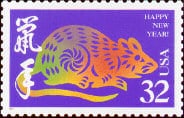
In 2008 February 7th was the first day of the Chinese New Year. The Chinese New Year falls on a different date each year. However, this is understandable because their ancestors used the new moon to fix the date of each new year.
The Chinese Calendar
2008 is the year of the rat. This Chinese New Year is also known as ‘Tze’.
Unlike western calendars, the Chinese calendar has names that are repeated every 60 years. In the Chinese ‘Stem-Branch’ calendar this is the 9th year of the 60 year cycle. Within the ‘Stem-Branch’ system is shorter cycle of 12 years denoted by these animals:
Rat Ox Tiger Hare Dragon Snake Horse Sheep Monkey Rooster Dog Pig
20082009 2010 2011 2012 2013 2014 2015 2016 2017 2018 2007
Chinese celebration for 2008.
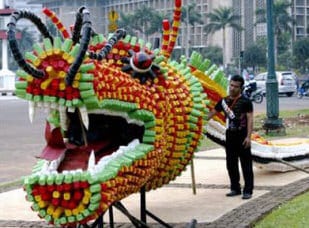
Record Breaking Dragon
A Chinese town has made the world’s longest dragon.
Shuangfeng town, Taicang city, China, made the 2,008 metre long dragon to mark the 2008 Beijing Olympics. It is a mile and a quarter long and will need 1,200 dancers to support it at the town’s traditional dragon dance.
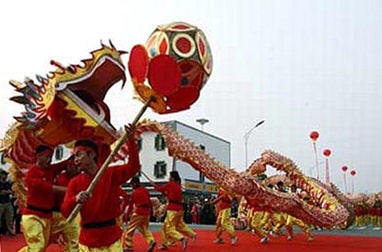
Apparently more than 10 workers worked over the months to make the huge dragon. It needed 4,200 meters of fabric and more than 300 bamboo poles recorded a China news Agency.
2008 Chinese Year of the Rat – Hamster Prices Rise
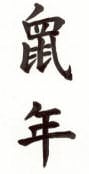
The price of hamsters risen threefold in China since the start of the Chinese New Year: the Year of the Rat. The animals are considered lucky and more acceptable pets than rats. The Xinhua news agency identified hamsters as having a better image than rats or mice; also that they are more likely to be amiable and friendly.
The Chinese word for rat, ‘laoshu’, covers a variety of animals that can include kangaroo rats, hamsters and moles. Pet shops have been selling out even at comparatively high prices of 30 Yuan [more than £2; approx. $3.90USD] for each hamster. Meanwhile, Nanning Zoo in southern China has been importing rat-like creatures from around the world in a tribute to the new year. Will and Guy have learned that the zoo’s collection now includes kangaroo rats, hamsters, moles, marmots, and flying squirrels
Chinese Proverbs
20 Number 6
Chinese Phrases
搞笑清洁笑话 in China roughly translates into clean funny jokes.
Chinese Characters
A simple example of Chinese characters showing how the sun symbol can be modified with a line to mean dawn.
P.S. Please write to Will and Guy if you have any examples of Chinese New Year humor.
Year of the Ox (2009)
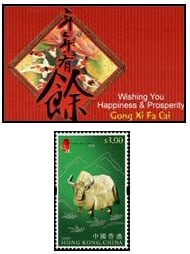
This year the date for the Chinese New Year was January 26th, 2009. The Chinese have been calculating the New Year for a long time; this year was be 4707 in the Chinese counting system.
Funny Chinese Sayings and Quotes
Will and Guy bring you these phrases, sayings and quotations translated from the Chinese to amuse and entertain you; perhaps you will find them thought provoking, also.
- Success means competition.
- An old pot is the best around the kitchen.
- One must be available, alert, active, and adaptable.
- If you have many best friends, you have no friends.
- Mountains can move, but not your character.
- Concern yourself about others more than yourself.
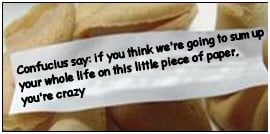
- Confucius say: if you think we’re going to sum up your whole life on this little piece of paper, you’re crazy.
More Chinese Sayings
- A nice person who is bad-tempered and foul-mouthed is not considered as a good person.
- Knowledge must be realised to become one’s wisdom.
- Love is not demanding but giving.
- Our greatest enemy is not another person, perhaps it is our own self.
- See who loves the other one more, and not who fears the other one more.
- The consumers of time while away their time: The creators of life are dynamic and are assets to others.
- Be patient kind and loving: Don’t worry and don’t fret.
- One who always looks for excuses cannot progress.
- Weeds do not grow easily on land grown with vegetables: Evil thoughts do not arise easily in a mind filled with kindness.
Chinese Proverbs
- Man with one chop stick go hungry.
- Man who drive like hell bound to get there.
- Chinese money proverb
- Chinese ‘Cracked Pot’ parable
How To Speak Chinese Funny
- It’s very dark in here………………………Wai So Dim?
20 Number 6
It’s a Dog’s Life
Meanwhile, Bill and Jackson’s wives decided to dine out a new Chinese Restaurant. Jackson’s wife Julie was inseparable from her Pekingese dog called ‘Pepe’. So Took took Pepe along with them to the restaurant. Whenever they went to their usual restaurant the manager’s wife looked after Pepe while they ate, and they thought it would be no different this new restaurant.
One-liners
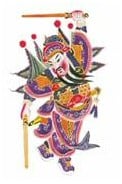
Share Good Wishes for Prosperity and Good Luck in 2009
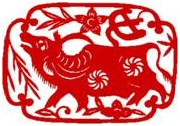
At the Chinese New Year on January 26th in 2009, you can do better than just saying Happy New Year, you can share the following good wishes with your Chinese friends:
新年快乐 xīn nián kuài lè = Happy New Year
过年好 ɡuò nián hǎo = Happy New Year
恭喜发财 ɡōnɡ xǐ fā cái = I wish You Great Prosperity
牛年吉祥 niú nián jí xiáng = Good Luck in the Year of the Ox
Chinese food served at the New Year has particular symbolism
- Most of the dishes served during Chinese New Year are symbolic of something positive and hopeful.
- Chicken and fish, for example, symbolize happiness and prosperity, especially when served whole.
- Dishes made with oranges represent wealth and good fortune because they are China’s most plentiful fruit.
- Noodles represent longevity: therefore, they should never be cut.
- Duck symbolizes fidelity, while eggs signify fertility.
- Bean curd or tofu, however, is avoided because its white colour suggests death and misfortune.
Chinese Food for 2009 New Year
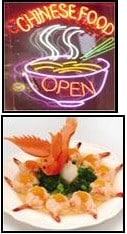
Dishes are also chosen based on homonyms; words that either are spelled the same or sound the same as other words. Fish [yu] is served because it sounds similar to the Chinese word for plenty, or profit [surplus]; whole fish represents a long life and good fortune. Turnips are cooked because their name [cai tou] also means ‘good luck.’
Another popular Chinese New Year dish is jiaozi, which is dumplings boiled in water. In some areas of China, coins are placed in the centre of jiaozi. Whoever bites into one of these dumplings will have an exceptionally lucky year.
Chinese New Year food is all about symbols, symbols denoting prosperity, good luck, fortune and health. This photo [right] shows Happy Jumping Shrimp.
For The Chinese New Year – The Colour Red and Fireworks
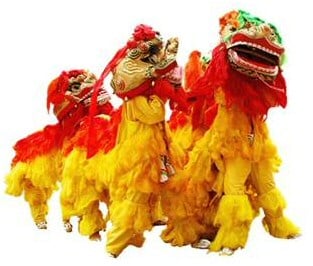
At the Chinese New Year (January 26th, 2009) red is important. People wear red clothes, they write poems on red paper, and give children ‘luck money’ in red envelopes. The symbolism behind the red colour is fire, and fire burns off bad luck. As for fireworks one belief is that the cracker jacks and sparks frighten away evil spirits.
Chinese New Year Stories
The Story of Nian
Our friend, Chou told Will and Guy this story about the beast, that lives under the sea or in the mountains, who often appears on New Year’s eve to attack people, particularly children – however, as luck may have it some things frighten him.
A long time ago during the age of great floods, and when the world was not a safe place, there was a vicious monster named Nian. Whenever the thirtieth day of the last lunar month arrived this monster would rise up out of the sea or he would come down from the mountains killing people and wreaking havoc in their fields and gardens. The people would bar their doors before dark and sit up all night, terrified. The next day they would leave their homes to greet their neighbours and congratulate them on surviving.
Once on the last night of the last month, legend has it, Nian suddenly burst into a small village devouring almost all the people who lived there. Only two families emerged unscathed.
The first were a newlywed couple who avoided harm because their celebratory red wedding clothes resembled fire to the monster, so it did not dare to approach them.
The other family was unharmed because their children were playing outside setting off noisy firecrackers and the noise scared the monster away.
Ever since then Chinese people have worn red clothes, set off firecrackers and put up red decorations on New Year’s Eve to keep the vicious monster Nian away.
The Chinese Story of the New Year Animals
This is a story from China. It is about twelve animals: a dog, a pig, a rat, an ox, a tiger, a hare, a dragon, a snake, a horse, a ram, a monkey and a cockerel.
One day the twelve animals were having an argument. They wanted every year to have a name. ‘I think that this year should be named after me,’ barked the dog. ‘It should be called the year of the Dog.’
‘No.’ gibbered the monkey, ‘I think this year should be named after me.’ said the monkey. ‘It should be called the Year of the Monkey.’
‘No, no,’ breathed the dragon. ‘This year should be named after me. It should be called the Year of the Dragon.’
The gods were listening. They heard the animals arguing. ‘Stop arguing,’ demanded one of the gods. The dog stopped arguing. The monkey stopped arguing. The dragon stopped arguing. They all stopped arguing and listened. The gods boomed, ‘Can you see the big river? You must have a race across the big river. We will name this year after the winner of the race.’
So, all the animals lined up on the bank of the river ready for the race. They’re off! The animals jumped into the water and swam as fast as they could towards the other side.
The ox was very strong and he could swim very fast. Soon he was in front of all the other animals; but the rat was very clever. He grabbed the ox’s tail and climbed onto his back. The ox didn’t know he was there.
The ox thought he was going to win the race. Just before the ox got to the other side, the rat jumped off the ox’s back onto the grass and won the race.
‘Yippee! Hoorah!’ shouted the rat, ‘I’m first.’
The ox was very surprised. ‘How did you do that?’ he asked, but the rat only laughed.
The gods laughed too and said, ‘The rat is the winner. We will call this year the Year of the Rat. The ox was second, so next year will be called the year of the Ox.
All the other animals finished the race. The tiger was third, the hare was fourth, the dragon was fifth, the snake was sixth, the horse was seventh, the ram was eighth, the monkey was ninth, the cockerel was tenth, the dog was eleventh and the pig was last.
The gods decided that each year would be named after one of the animals in the race. The animals didn’t argue any more. They were very happy, especially the rat because he had won the race.
Chinese New Year Masks
Masks in Chinese culture are part and parcel of the world culture of masks……. 面具 Mianju. Masks first appeared in China during the Shang and Zhou dynasty some 3,500 years ago. The colourful and exciting celebrations for the Chinese New Year last for several days and end with the lantern [Yuanxiao] festival.
Materials in Chinese New Year Masks
Chinese New Year Masks are made of varied materials including cloth, paper, grass, leather, metal, shell, and carved of stone or wood. They are painted with Chinese symbolic designs and vivid colours. Some masks have realistic human or animal features like lion or dragon, while others provide a grotesque appearance. Red is considered as a lucky colour for Chinese people, therefore there are lots of red masks worn during the celebrations of New Year. Chinese New Year Masks are amongst the best creations in the art world and are highly sought after by art collectors.
Many of the masks or sometimes replicas, can be viewed in museums and art galleries in many parts of the world. Chinese New Year is swathed in beliefs of gods, spirits of ancestors, legendary beings, good and or evil, the dead, animal spirits, and other beings believed to have supreme power over humanity. Masks featuring such supreme powers are honoured and are worn during the rituals surrounding the Chinese New Year like the Chinese new year dragon dance or lion dance. Chinese New Year Masks are also hung around the home as decoration.
Lantern festival held in London, England
The traditional food for the Lantern Festival is Yuanxiao dumplings, named after the lonely palace maid of long ago. [Some versions of the story have her preparing stuffed dumplings for the God of Fire, as this was one of his favourite foods]. Yuanxiao are made with sticky rice flour. They can be sweet or savoury; filled with everything from sugar, walnuts, and dried tangerine peel to meat and vegetables.
Chinese New Year Masks display the feelings and emotions of merriment associated with this festival. Chinese people all over the world usher in the New Year by cooking special food, cleaning their homes, purchasing new clothes and buying presents for friends and family. In the midst of all these activities, various artworks like Chinese New Year Masks in rich colours display the essence of the festivity.
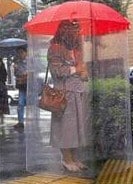
If it Rains: Fun Chinese Umbrella
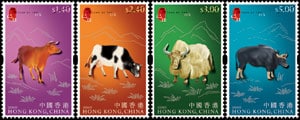
Stamps Showing the Chinese Year of the Ox
Chinese Phrases
搞笑清洁笑话 in China roughly translates into clean funny jokes.
Chinese Characters
A simple example of Chinese characters showing how the sun symbol can be modified with a line to mean dawn.
P.S. Please write to Will and Guy if you have any examples of funny Chinese sayings.
Year of the Rabbit (2011)
The date for Chinese New Year 2011 – February 3rd. This is also known as Spring Festival or CNY 2011.
The Chinese Calendar
Unlike western calendars, the Chinese calendar has names that are repeated every 60 years. Within the ‘Stem-Branch’ system is shorter cycle of 12 years denoted by animals and 2011 is the year of the Rabbit. Actually, this is the Xīn-măo 辛卯 year. Xīn (Metal) is the eighth of the ten celestial stems and Mao (Rabbit) is the fourth of the twelve terrestrial branches and marks the year of the Rabbit or Hare.
Calculating ‘When is the Chinese New Year in 2011’
The fact that the date of Chinese New Year (CNY) varies within about a month is a clue that it’s linked to the new moon. A rough, and almost infallible guide is that the date of the Chinese New Year falls on the second new moon after the winter solstice. The winter solstice always falls on December 22nd, the next new moon is January 4th, and the second new moon is on February 3rd 2011.
Will and Guy admit that the precise rules for determining ‘When is the Chinese New Year’, are far more complex. For example, one problem with any lunar calendar system is that some years there are 13 new moons. The Chinese deal with this by slotting in an extra intercalary month.
If the year ends in 0 it is Yang Metal.
If the year ends in 1 it is Yin Metal.
If the year ends in 2 it is Yang Water.
If the year ends in 3 it is Yin Water.
If the year ends in 4 it is Yang Wood. If the year ends in 5 it is Yin Wood.
If the year ends in 6 it is Yang Fire.
If the year ends in 7 it is Yin Fire.
If the year ends in 8 it is Yang Earth.
Chinese New Year 2011 – The Year Of The Rabbit
Will and Guy have researched the place of the rabbit in the Chinese zodiac and this is what we have found for CNY 2011.
- People born under the sign of the rabbit are traditionally thought to be gentle, sensitive, modest, and merciful and have a strong memory.
- They like to communicate with others in a humorous manner.
- They cannot bear dull life, so they are good at creating romantic or interesting situations but they lack meditative abilities and often sink money into ideas that may cause failures in their career.
- People born in the Year of the Rabbit are articulate, talented, and ambitious.
- They are virtuous, reserved, and have excellent taste.
- Rabbit people are admired, trusted, and are often financially lucky.
- They are fond of gossip but are tactful and generally kind.
- Rabbit people seldom lose their temper.
- They are clever at business and being conscientious, never back out of a contract.
- They would make good gamblers for they have the uncanny gift of choosing the right thing. However, they seldom gamble, as they are conservative and wise.
Year of the Rabbit – The Legend of the Jade Rabbit
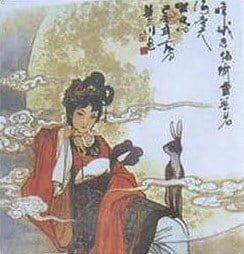
In this legend, three fairy sages transformed themselves into pitiful old men and begged for something to eat from a fox, a monkey and a rabbit.
The fox and the monkey both had food to give to the old men, but the rabbit, empty-handed, offered his own flesh instead, jumping into a blazing fire to cook himself.
The sages were so touched by the rabbit’s sacrifice that they let him live in the Moon Palace where he became the “Jade Rabbit.”
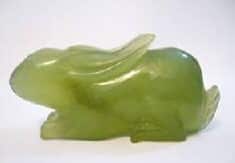
A Chinese Rabbit Folk Tale
Once upon a time, there was a farmer in the Song State, China. When he was working in a field, he saw a rabbit running past him, then it broke its neck on a tree and died. The farmer grabbed the dead rabbit and made a stew. it was delicious.
After that, the farmer didn’t want to work on his field anymore. He just sat next to that same tree and waited for a rabbit to smash itself and die.
Unfortunately, there were no more rabbits afterwards and the farmer’s field grew nothing but weeds. The moral of this story from China is that nothing can be achieved without either working or paying.
Chinese idiom: 守株待兔 [shou zhu dai tu – literally, “Guarding the tree awaiting a rabbit” ] You’re waiting for a rabbit.
In the Year of the Rabbit?
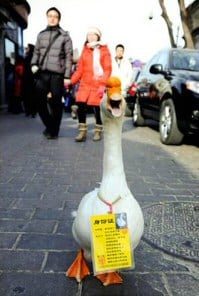
A goose has been seen and photographed walking around by itself with an ID card around its neck last week in Beijing’s Nanluoguxiang district, a well known tourist area in the capital.
Photo right by Liu Zhen
The Rabbit and The Back Pain – An Explanatory Folktale
There was once a rich man who was fond of rabbits and raised them for amusement. ‘Look after them carefully. Ah Ji,’ he said. ‘If any of them dies, it’ll be deducted from your pay.’ One day Ah Ji accidentally dropped a stick that landed on a rabbit right across its lower back. ‘Uh-oh!’ he exclaimed. Scared stiff, he quickly hid the rabbit in a bean patch. A couple of days later, the rich man noticed that a rabbit was missing and took Ah Ji roundly to task.
Ah Ji had no choice but to go to the bean patch and look for the rabbit. ‘The rabbit is tearing around, ‘ he said. ‘It must have eaten something. Huh? How does an injured rabbit have the energy to run around like that? That’s really weird.’ Ah Ji tried to grab the rabbit, but it hopped around so much he couldn’t. He went home and told his father what had happened. His father had been severely beaten by the rich man a few months earlier. His lower back hurt him so much he couldn’t get out of bed. ‘I’d like to know what that rabbit ate,’ his father said. ‘Maybe it’d be good for my back.’
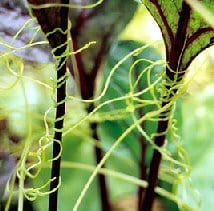
So Ah Ji struck another rabbit across the back and put it in the bean patch to see what would happen. At first, the rabbit couldn’t move. It stretched its neck and nibbled the seeds of a yellow plant that clung to a bean stalk. After three or four days, the rabbit was up and about.
‘Hey! If the seeds of that plant could heal the rabbit’s back, they could have the same effect on people,’ his father said. ‘Go pick some and cook them into a medicine for me to drink.’ The father drank the concoction. A few days later he could get out of bed and move around.
Two months later, he was able to work in the fields. Finally, Ah Ji left the rich man’s house and devoted himself to gathering seeds and making them into medicine, which he distributed to people suffering from back pain.
As a result of his story, the herb is called tusizi, or rabbit’s thread, in Chinese. Its English name is dodder.
Chinese Year of the Rabbit 2011 London
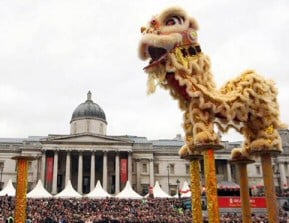
Dancers perform a Chinese lion dance as part of the 2011 Chinese New Year celebrations in Trafalgar Square, London, England
Dates of Chinese Valentine’s Day
‘When is the Chinese Valentine’s Day in 2011?’, is sure to be a mean question in pub quizzes. So prepared, know the date, and remember the rule, 7th day of the 7th month of the Chinese calendar.
For CNY 2011 – The Colour Red and Fireworks
Chinese Phrases
搞笑清洁笑话 in Chinese translates into clean funny jokes.
Chinese Characters
A simple example of Chinese characters showing how the sun symbol can be modified with a line to mean dawn.
Chinese Proverbs
20 Number 6
Chinese New Year 2011 Ice Festival
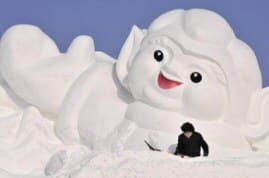
The 27th Harbin International Ice and Snow Festival began on Jan 5th, 2011. A worker shapes a snow sculpture prior to the Harbin International Ice and Snow Festival in Harbin, Heilongjiang province.
Can you see a man in this picture? – It tells you the scale.
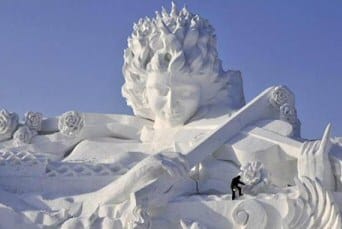
A worker installs lights on a snow sculpture prior to the Harbin International Ice and Snow Festival in Harbin, Northeast China’s Heilongjiang province.
China: Further Fascinating Fun Facts
Did You Know?
- The world’s largest producer of apples is China.
- The Chinese never give apples to invalids because “ping”, the Chinese for apple, sounds a bit like “bing”, which is Chinese for illness.
- 14 countries share a border with China and they are Vietnam, Laos, Myanmar, Bhutan, Nepal, India, Pakistan, Afghanistan, Tajikistan, Kyrgyzstan, Kazakhstan, Mongolia, Russia and North Korea
- In ancient China, mouse meat was considered a delicacy, now, a favorite food of most Chinese is sun-dried maggots.
- In China, there is a type of tea called white tea which is actually simply boiled water.
- 24% of the world speaks Chinese. There are over 200 different Chinese languages and regional dialects. The official state language is Pu-tong-hwa [Mandarin].
- China manufactures 60% of the world’s bicycles.
- People of ancient China believed that swinging your arms could cure a headache.
- According to economists, China will become the world’s wealthiest nation by the year 2012.
- Fingerprinting was used in China as early as 700 AD.
One for luck: 20% of China’s plants are used in medicine.
Chinese Bus Company Chooses Innovative Way To Slow Down Their Drivers
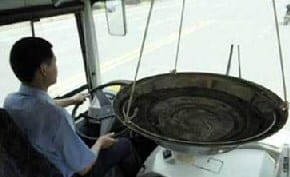
An omnibus company in China has launched a new “drive safely” campaign, by hanging big bowls of water next to their drivers. The Longxiang Public Bus Company in Changsha, Hunan province, says drivers must drive gently to avoid spilling any water. Bus drivers are expected to ensure the bowls are still full when they finish their shift Will and Guy have discovered.
The company warns drivers that CCTV footage will be studied to make sure they do not top up the bowls with water.
We have learned that, ‘Passengers often complain that sudden braking and bad driving makes them really uncomfortable on the buses,’ from a spokesman of the company. ‘So by hanging bowls of water in the driver’s cab will discourage them from making any jolting starts, sudden braking or bad turns.’
Will and Guy would like to see this idea introduced into the UK.
Please write to us if you have any interesting articles on the Chinese New Year 2011 – Year of the rabbit.
Year of the Dragon (2012)
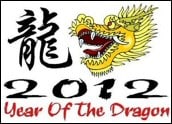
The date for the Chinese New Year in 2012 is January 23rd. (CNY 2012) Will and Guy have collected interesting facts around this important festival.
The Chinese Calendar 2012
2012 is the year of the Dragon. It is the rén-chén 壬辰 year (Water Dragon). Rén (Water) is the ninth of the ten celestial stems and chén (Dragon) is the fifth of the twelve terrestrial branches and marks the year of the Dragon.
Calculating ‘When is the Chinese New Year in 2012’
The fact that the date of Chinese New Year varies within about a month is a clue that it’s linked to the new moon. A rough, and almost infallible guide is that the Chinese New Year falls on the second new moon after the winter solstice. The winter solstice always falls on December 22nd, the next new moon is on December 24th, and the second new moon is on January 23rd 2012.
Will and Guy admit that the precise rules for determining ‘When is the Chinese New Year’, are far more complex. For example, one problem with any lunar calendar system is that in some years there are 13 new moons. The Chinese deal with this by slotting in an extra intercalary month.
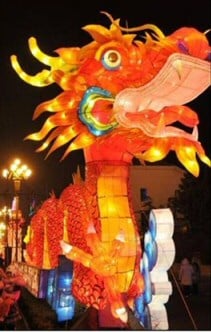
If the year ends in 0 it is Yang Metal.
If the year ends in 1 it is Yin Metal.
If the year ends in 2 it is Yang Water.
If the year ends in 3 it is Yin Water.
If the year ends in 4 it is Yang Wood. If the year ends in 5 it is Yin Wood.
If the year ends in 6 it is Yang Fire.
If the year ends in 7 it is Yin Fire.
If the year ends in 8 it is Yang Earth.
Happy New Year of the Dragon
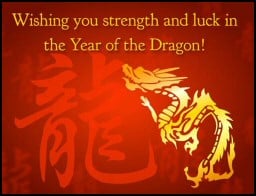
新年快乐 Xīnnián kuàilà Happy New Year
过年好 Guò nián hăo Happy New Year
恭喜发财 Gōngxĭ fācái I wish You Great Prosperity
龙年吉祥 Lóng nián jíxiáng Good Luck in the Year of the Dragon
‘When is the Chinese Valentine’s Day in 2012?’, is sure to be a mean question in pub quizzes. So prepared, know the date, and remember the rule, 7th day of the 7th month of the Chinese calendar.
China: 2012 Dragon Stamp Causes Furore
A stamp designed to mark China’s upcoming Year of the Dragon is drawing unusual criticism for its fang-bearing monster Will and Guy have discovered.
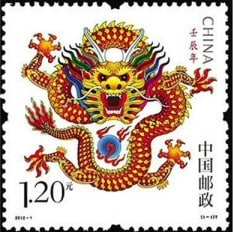
The stamp [shown here] went on sale recently, drawing the heavy crowds that normally flock to buy the annual Lunar New Year stamps. However, we have learned from friends that the dragon’s attacking pose on this year’s stamp has led some people to call it too ferocious and rather fearsome.
Zhang Yihe, a renowned Chinese writer, wrote on her Sina Weibo microblog that she was ‘scared to death’ when she first saw the red and yellow creature with scales and claws.
Another writer, Tan Xudong, called it an ‘incomparably ugly dragon-year stamp.’
Its designer, Chen Shaohua,reported that he had received criticism, abuse and support for the stamp, brought out ahead of the Chinese New Year, which is on the 23rd January 2012. Chen has defended his design, saying that the dragon should be interpreted as a symbol of China’s rising confidence.
“As a large country which has major influence in the world, China is ushering in the restoration of national confidence,” he has written.
According to The Global Times newspaper, Chen said that his design derives from the pattern on “dragon robes” worn by Chinese emperors – whose symbol was the dragon – in the Qing Dynasty (1644-1911) and a screen featuring dragons in a Beijing park that was a pleasure ground for the emperor.
Mythical legend claims that Chinese people are descended from the dragon, and many believe it’s an auspicious symbol and stamp sellers are said to be profiting from the sale of Dragon stamps.
However, sellers at a philatelic market in Beijing were reporting bumper pre-sale orders, with eager collectors paying up to $30 for a commemorative pack of the 12 penny stamps which go on sale very soon.
The Smallest Dragon Sculpture in the World
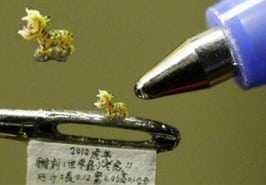
An artist in Taiwan announced his latest creation of what appears to Will and Guy to be the smallest dragon sculpture in the world to welcome the year of the dragon in 2012.
The sculpture in only half an inch in length and has been displayed on top of coin to emphasise its tiny size. A magnifying glass attached to the sculpture’s glass case helps visitors to see the miniature.
56-year-old miniature artist Chen Forng-shean from Taiwan said that it took him three months to make the dragon.
He added, ‘the hardest part about making this dragon is the sculpting for the limbs and the claws, these are the most delicate parts, and also its open jaw and the whiskers, those whiskers are very thin. After the dragon was completed, I have to pay attention to its body so it looks like the dragon is above the clouds, that’s the dragon’s spirit’.
The Significance of the Chinese Dragon
Chinese around the world, proudly proclaim themselves “Lung Tik Chuan Ren” which may be translated as Descendents of the Dragon. Unlike the negative energies associated with Western Dragons, most Eastern Dragons are beautiful, friendly, and wise. They are the angels of the Orient. Instead of being hated, they are loved and worshipped.
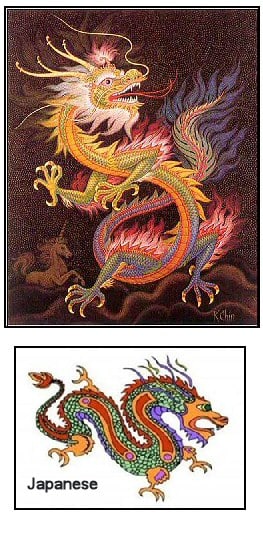
Chinese dragons have a horse’s head and a snake’s body. Often they have four jaws. Chinese dragons are divided into Heavenly Dragons, Earthly Dragons and Dragons in water. The most well-known dragons are the Four Sea Dragon Kings governing the east, south, west, north side of the sea. These Four Sea Dragon Kings are in charge of creating clouds and rains for human world. Chinese people do not call a water faucet a tap, but a “Water Dragon Head”.
The dragon is regarded as the symbol of the Chinese nation and can be seen everywhere in its culture: including literature, architecture, art, furniture and even clothing.
Dragon Folklore
Dragons are an important part of many Chinese festivals, including Chinese New Year. In ancient China, dragons did not breathe fire. Dragons were wise and caring. They guarded the wind, the rain, the rivers, precious metals and gems.
Many countries use dragons in their art, especially China, Korea and Japan. It’s easy to tell the difference between Chinese, Korean and Japanese dragons. Just count the dragon’s toes. Of course, you have to get really close. Sometimes it looks as if they have 3 toes, when they really have 5, because some are hidden from sight. But, for a quick rule of toe:
- Chinese dragons have five toes
- Korean dragons have four toes
- Japanese dragons have three toes
Funny Legend of the Dragon
The farther dragons travel from their home in China, the more toes they lose. Fortunately, Will and Guy have discovered, when wandering dragons return home to China, all their missing toes grow back. Since most dragons would prefer to keep all their toes, all the time, few dragons ever wander very far from home.
Chinese Character for the Dragon

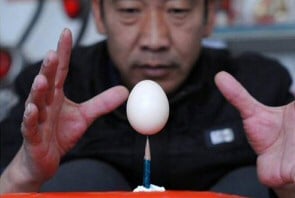
Chinese Truck Driver Balances Egg On Pencil
Chinese Proverbs
20 Number 6
Thinking of Visiting China in 2012?

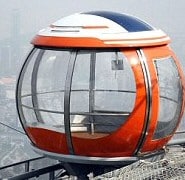
The world’s highest Ferris wheel is set to open for business on top of a 1,480ft tower in Guangzhou, capital of the southwestern Chinese province of Guangdong. Passengers can ride in observation pods.
Built on the 450-meter-high Canton Tower, the amazing wheel consists of 16 pods holding a total of 96 fearless passengers. Each capsule is just over three meters wide, and built using a special macromolecule material which allows a 360-degree crystal clear view.
Unlike traditional American Ferris wheels, this Chinese tower in Guangdong has a 15-degree incline and can resist 8-magnitude earthquakes and Beaufort scale 12 typhoons.
Chinese New Year Ice Festival
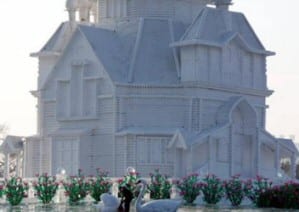
The Harbin International Ice and Snow Festival is held each January. A worker shapes a swan sculpture prior to last year’s International Ice and Snow Festival in Harbin, Heilongjiang province.
New Broom for the New Year?
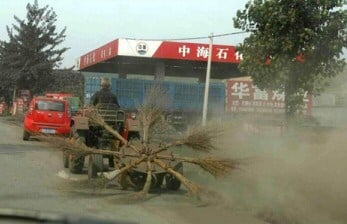
Please write to Will and Guy if you have any interesting information about the Chinese New Year 2012.
Year of the Snake (2013)
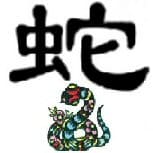
The date for the Chinese New Year in 2013 is February 10th.
The Chinese Calendar 2013
2013 is the year of the Snake. It is the guĭ-sì 癸巳 year (Water Snake). Guĭ (Yin Water) is the tenth of the ten celestial stems and Sì (Snake) is the sixth of the twelve terrestrial branches and marks this 10/6 the year of the Snake.
Calculating ‘When is the Chinese New Year in 2013’
The fact that the date of Chinese New Year varies within about a month is a clue that it’s linked to the new moon. A rough, and almost infallible guide is that the Chinese New Year falls on the second new moon after the winter solstice. The winter solstice always falls on December 22nd, the next new moon is on January 11th 2013, and the second new moon is on February 10th 2013.
Will and Guy admit that the precise rules for determining ‘When is the Chinese New Year’, are far more complex. For example, one problem with any lunar calendar system is that some years there are 13 new moons. The Chinese deal with this by slotting in an extra intercalary month.
If the year ends in 0 it is Yang Metal.
If the year ends in 1 it is Yin Metal.
If the year ends in 2 it is Yang Water.
If the year ends in 3 it is Yin Water.
If the year ends in 4 it is Yang Wood. If the year ends in 5 it is Yin Wood.
If the year ends in 6 it is Yang Fire.
If the year ends in 7 it is Yin Fire.
If the year ends in 8 it is Yang Earth.
‘When is the Chinese Valentine’s Day in 2013?’, is sure to be a mean question in pub quizzes. So prepared, know the date, and remember the rule, 7th day of the 7th month of the Chinese calendar.
Some Interesting Trivia For The Chinese Year of the Snake – 2013

Since Snakes are born under the same Animal Sign, they often share likes and dislikes. Following are similar likes and dislikes of the Snake personality.
Snakes Likes:
- Colour Preference: Red
- Gems and Stones: Topaz, Jasper, Bloodstone
- Suitable Gifts include: binoculars, Tarot cards, oils and lotions, stamp collection
- Hobbies and Pastimes: Astrology, painting, touring, photography
Snakes Dislikes:
- Being interrupted, being mislead personally or professionally, failure.
Five Further Thoughts from Will and Guy
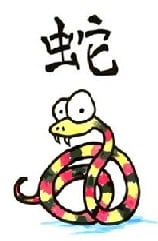
- If a rich man ate a snake, they would say it was because of his wisdom; if a poor man ate it, they would say it was because of his stupidity. – Saudi Arabian Proverb
- Kill the snake of doubt in your soul, crush the worms of fear in your heart and mountains will move out of your way. – Kate Seredy
- Snake is a sign in the Chinese Zodiac. People born in the Year of the Snake tend to be calm, determined, passionate. [1917, 1929, 1941, 1953, 1965, 1977, 1989, 2001, 2013]
- Native Americans associate the shedding of a snake’s skin with rebirth.
- Chinese Zodiac Snakes are rich in wisdom and charm, are romantic and deep thinking and your intuition guides you strongly. Avoid procrastination and a stingy attitude towards money. Keep a sense of humour about life. The Snake would be most content as a teacher, philosopher, writer, psychiatrist and fortune teller.
The Snake
Mine is the wisdom of the ages.
I hold the key to the mysteries of life.
Casting my seeds on fertile ground,
I nurture them with constancy and purpose.
My sights are fixed.
My gaze unchanging.
Unyielding, inexorable and deep,
I advance with steady, unslacked gait, the solid earth beneath me.
I am the snake.
By Theodora Lau
Chinese Phrases
干净免费笑话,故事图片、视频剪辑 means clean free jokes, stories pictures and video-clips.
Will and Guy’s Amusing and Funny Chinese Fishing Story
Wang Chien-Ming, (王建 in Mandarin), having settled down to fish at the edge of the river in Guangdong province, soon realized that he had forgotten to bring any bait.
Slightly annoyed with himself, Wang noticed a little snake passing by who had caught a worm. Knowing it was the year of the snake, Wang grabbed the snake and robbed him of his worm. Then later, feeling sorry for the little snake with no lunch, he snatched him up again and poured a little beer down his throat. Then he continued happily with his fishing.
An hour or so later Wang felt a tug at his trouser leg. Looking down, he saw the same snake with three more worms in his mouth………………
Chinese Proverbs
20 Number 6
The Man Who Helped Millions to Read with Pinyin Chinese
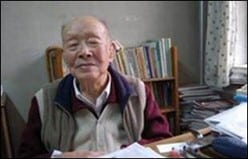
Zhou Youguang helped invent Pinyin, a writing system that turns Chinese characters into words using letters from the Roman alphabet. This makes it easier to learn how to pronounce Chinese words, and is credited with helping raise literacy rates in China. Students struggling to learn Chinese might not know it, but their task has been made easier because of the work of one man.
Despite his achievements, Mr Zhou remains largely unknown in his home country say Will and Guy, which comes as a major surprise.
Perhaps that is because the 106-year-old is a defiant character, refusing to take much credit for his work or pander to the Chinese Communist Party. He is critical of the party that governs China; and old enough not to care who is listening to what he has to say. Mr Zhou has remained optimistic about life despite going through tough times.
When he started work on developing Pinyin, 85% of Chinese people could not read or write.
Now, we can state that is just a few per cent of Chinese who cannot read.
See the Chinese New Year of 2014 »
Please write to Will and Guy if you have any interesting stories about the Chinese New Year 2013.
Year of the Horse (2014)
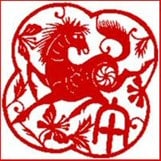
The date for the Chinese New Year in 2014 is January 31st.
The Chinese Calendar 2014
Unlike western calendars, the Chinese calendar has names that are repeated every 60 years. Within the ‘Stem-Branch’ system is shorter cycle of 12 years denoted by animals:
2014 is the year of the Horse. It is the jiăwŭ (甲午) year (Wooden Horse). Ji is the first of the ten celestial stems and ăwŭ (Horse) is the seventh of the twelve terrestrial branches and thus 1/7 marks the year of the Horse.
Rat Ox Tiger Rabbit Dragon Snake Horse Sheep Monkey Rooster Dog Pig
2008 2009 2010 2011 2012 2013 2014 2015 2016 2017 2018 2007
Calculating ‘When is the Chinese New Year in 2014’
The fact that the date of Chinese New Year varies within about a month is a clue that it’s linked to the new moon. A rough, and almost infallible guide is that the Chinese New Year follows the second new moon after the winter solstice. The winter solstice falls on December 21st, the next new moon is on January 1st 2014, and the second new moon is on January 30th 2014.
Will and Guy admit that the precise rules for determining ‘When is the Chinese New Year’, are far more complex. For example, one problem with any lunar calendar system is that some years there are 13 new moons. The Chinese deal with this by slotting in an extra intercalary month.
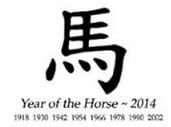
The Chinese New Year Calendar – With Its Associated 12 Animals
The lunar Chinese New Year (CNY) calendar below shows which of 12 animals you are! Naturally the animal depends on the year in which you were born. Note: if you were born in January or February you need to check if your birthday was before or after the date of that Chinese New Year. (If it was before this day your animal is the one shown for the previous year).
60 Year Cycle of the Chinese New Year Calendar
Unlike western calendars, the Chinese calendar has names that are repeated every 60 years. Within the ‘Stem-Branch’ system is shorter ‘Celestial’ cycle of 12 years denoted by animals. Furthermore, the Chinese believe that people born in a particular year take on the characteristics of the animal associated with that year.
Rat Ox Tiger Rabbit Dragon Snake Horse Sheep Monkey Rooster Dog Pig
2008 2009 2010 2011 2012 2013 2014 2015 2016 2017 2018 2007
Another dimension of the Chinese zodiac is the 5 ‘Terrestrial’ elements of metal, water, wood, fire and earth.
If the year ends in 0 it is Yang Metal.
If the year ends in 1 it is Yin Metal.
If the year ends in 2 it is Yang Water.
If the year ends in 3 it is Yin Water.
If the year ends in 4 it is Yang Wood. If the year ends in 5 it is Yin Wood.
If the year ends in 6 it is Yang Fire.
If the year ends in 7 it is Yin Fire.
If the year ends in 8 it is Yang Earth.
If the year ends in 9 it is Yin Earth.
Start date for the Chinese New Year Calendar 2013 and following years
The lunar Chinese New Years dates are:
2013 – Feb 10; 2014 – Jan 31; 2015 – Feb 19; 2016 Feb 8th; 2017; Jan 28th.
Is It a Dragon? No, 2014 is the Year of the Horse
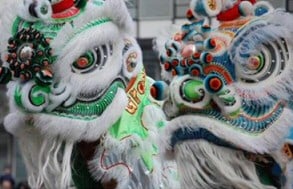
Astrology About The Horse
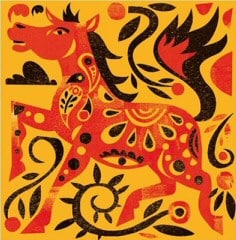
Those Born in the Year of the Horse
Will and Guy have learned that the noblest of the signs, some might say, is that of the horse. Horses are popular, quick-witted, charming, cheerful, and talented.
People born in the Year of the Horse are popular. They are cheerful, skilful with money, and perceptive, although they sometimes talk too much.
They are wise, talented, good with their hands, and sometimes have a weakness for members of the opposite sex.
They are impatient and hot-blooded about everything except their daily work. They like entertainment and large crowds. They are very independent and rarely listen to advice.
They are most compatible with Tigers, Dogs, and Sheep.
Astrologically, the horse is placed directly opposite the rat. The rat is the creator and the horse is the “consumer.”
Therefore a horse year may be marked by an increase in business and commercial activity, particularly those involved with non-essentials like luxury cars, high fashion, alcoholic beverages, athletics, and anything “male” oriented.
Unfortunately, it is often a year of waste. A household should be careful to make sure they don’t overspend their budgets during a horse year.
Chinese Horse Folk Tales
As in most Chinese Stories there is a moral hidden within them; these examples are no exception to that rule.
An Old Man’s Wisdom – A Blessing in Disguise
Once upon a time in Chinese myths, there was a wise old man who lived in the steppes. He owned many horses. One evening, after a long day of working in the fields, he came home to discover that one of his horses, a mare, had run off. His family and his neighbours searched the surrounding area. When they finally gave up, they sent him their condolences, ‘We are sorry that this unfortunate incident happened to you.’
The old man of the steppes remarked calmly, ‘The loss of my mare is not necessarily a bad thing. All will be shown for its true worth in time.’
The next morning, the old man of the steppes looked up in the horizon and saw two horses coming towards his house. The first horse was his mare that had run off, and the other was a stallion following the mare. Even from a distance, he could see that this stallion was a war horse of great stature and worth. He quickly inquired at the county office whether anyone had reported the loss of their stallion.
The county magistrate advised him to keep the horse until someone had reported it missing. That evening, the old man’s family and his neighbours celebrated the return of his mare as well as his newly acquired stallion. At the celebration, he was called upon to make a speech. The old man of the steppes stood up and remarked calmly, ‘The acquisition of this stallion is not necessarily a good thing. All will be shown for its true worth in time.’
Chinese myths say that a week later, the old man’s son took the stallion out for a ride. Not being skilled in manoeuvring a great war horse, the boy suffered a terrible fall. As a result, his leg was broken. The old man’s family and his neighbours crowded around the boy and commented, ‘This is an awful thing that has happened. This stallion has brought bad luck to the family.’
The old man of the steppes stood by the boy and remarked calmly, ‘This accident is not necessarily a bad thing. All will be shown for its true worth in time.’
Sometime later, the kingdom was involved in a cruel and unjust war with a neighbouring kingdom. All the young men of the kingdom were called upon to enlist in the army. The old man’s neighbours lamented as all their sons were called off to fight in the war. It was impossible to escape the draft as the enlisting officers moved from county to county and house to house in search of all the young men. Inevitably, they finally came upon the old man’s house.
Seeing the stallion in the yard, they remarked to themselves, ‘This must be the home of a great warrior. But why has this coward not gone off to war? We must seize him at once.’
When they searched the house, they found only the old man of the steppes, his wife and their crippled son.
The enlisting officers then remarked, ‘This young man would have been a fine soldier if it were not for his broken leg. We cannot take him with us.’ And thus, their son was exempted from fighting in the war.
The old man’s neighbours, observing with amazement the declared, ‘What wisdom this old man has, that he can foresee both good and bad incidences for what they are truly worth.’
More Stories For the Chinese New Year 2014
Buying a Good Horse
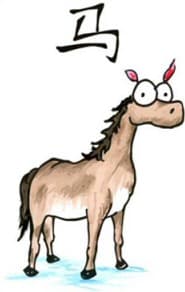
There was an Emperor who was willing to pay a thousand pieces of gold for a horse that could run a thousand mile without stopping. For three years he tried in vain to find such a steed.
Then Chenglei offered, ‘Let me look for a horse My Lord.’
The Emperor agreed to this.
After three months Chenglei came back, having spent five hundred pieces of gold on a horse’s skull.
The Emperor became enraged. ‘I want a live horse.’ he roared. ‘What use is a dead horse to me? Why spend five hundred pieces of gold on nothing?’
Chenglei replied philosophically, ‘If you will spend five hundred pieces of gold on a dead horse, won’t you give much more for a live one? When people hear of this, they will know you are really willing to pay for a good horse, and will quickly send you their best.
Sure enough, in less than a year the Emperor succeeded in buying three excellent horses.
Chinese Horse Sausage
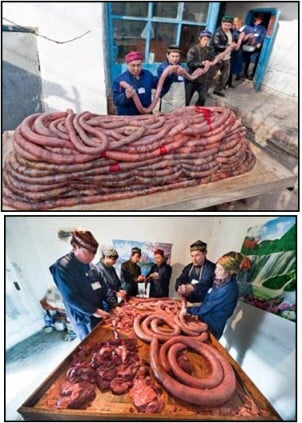
A 213 metre long and weighing some 1,256-kilogram horse casing sausage is dried in Yining of Northwest China’s Xinjiang Uygur autonomous region.
Photos – Xinhua
A Kazak horse meat butcher made the sausage with casings from 30 horses and thigh meat from another eight 5-year-old horses.
Did You Know? Horse Trivia and China
- The record for most runners in a horse race is 228 set in Bayanwula, Xiwuzhumuqinqi, Inner Mongolia Autonomous Region, China on 25th July 2005.
- The White Horse Temple [Baima Si] in Luoyang, Henan Province, was the first Buddhist temple in China, established by Emperor Mingdi in the year 68 AD. The historic, leafy site features several ancient buildings.
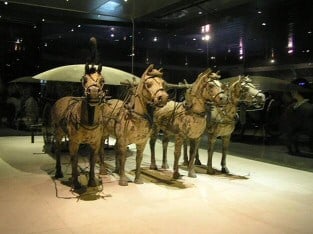
- The Terracotta Army or the “Terra Cotta Warriors and Horses”, is a collection of terracotta sculptures depicting the armies of Qin Shi Huang, the First China. The figures, dating from 210 BC, were discovered in 1974 by some local farmers in Lintong District, Xi’an, Shaanxi province.
- Xian Cavalryman of the Terracotta Army.
- Four bronze horses with chariot. Representing part of the Emperor’s army
Dates for Chinese Valentine’s Day
‘When is the Chinese Valentine’s Day in 2014?’, is sure to be a mean question in pub quizzes. So prepared, know the date, and remember the rule, 7th day of the 7th month of the Chinese calendar.
Chinese Phrases
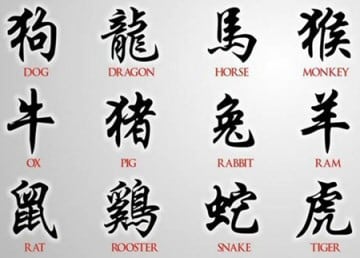
搞笑清洁笑话 in Chinese roughly translates into clean funny jokes.
干净免费笑话,故事图片、视频剪辑 means clean free jokes, stories pictures and video-clips.
Will and Guy’s Amusing and Funny Chinese Fishing Story
Wang Chien-Ming, (王建 in Mandarin), having settled down to fish at the edge of the river in Guangdong province, soon realized that he had forgotten to bring any bait.
Slightly annoyed with himself, Wang noticed a little snake passing by who had caught a worm. Knowing it was the year of the snake, Wang grabbed the snake and robbed him of his worm. Then later, feeling sorry for the little snake with no lunch, he snatched him up again and poured a little beer down his throat. Then he continued happily with his fishing.
An hour or so later Wang felt a tug at his trouser leg. Looking down, he saw the same snake with three more worms in his mouth………………
Chinese New Year Jokes, Proverbs and Stories
Chinese Proverbs
- Wife who put husband in doghouse soon find him in cathouse.
- War doesn’t determine who is right, war determines who is left.
- A bird does not sing because it has an answer. It sings because it has a song.
- He who asks is a fool for five minutes, but he who does not ask remains a fool forever.
- Chinese ‘Cracked Pot’ parable
How To Speak Chinese Funny
- I thought you were on a diet…………….Wai Yu Mun Ching?
- This is a tow-away zone………………….No Pah King
- Our meeting is scheduled for next week……Wai Yu Kum Nao?
- Staying out of sight……………………….Lei Ying Lo
20 Number 6
It was Chinese New Year. Bill and Jackson had just staggered back home from a hard night’s drinking when they noticed that a menu from the new restaurant next door had come through the letter box. On a whim they decided to celebrate the Chinese New Year with a take-away. Jackson, was just off out of the door to fetch their meal when Bill turned to him and said, ‘Please get me 20 number 6 while you’re at the take-away.
Jackson returned with their chicken Chou Mein, sweet and sour pork and 20 portions of egg fried rice. Bill said, ‘Where’s me fags’. Jackson said, ‘What cigarettes, you asked for 20 number 6 and that’s what you’ve got, enough egg fried rice to feed a Chinese Junk from Shanghai to Hong Kong’.
Bill said, ‘When I was last in England Embassy No 6 was a packet of fags.’
It’s a Dog’s Life
Meanwhile, Bill and Jackson’s wives decided to dine out a new Chinese Restaurant. Jackson’s wife Julie was inseparable from her Pekingese dog called ‘Pepe’. So they took Pepe along with them to the restaurant. Whenever they went to their usual restaurant the manager’s wife looked after Pepe while they ate, and they thought it would be no different this new restaurant.
Julie and her friend Rachel, gave Pepe to the owner and went to their seats. They ordered their meal, had a few drinks and eventually their meal arrived. They were mortified when it turned out to be their beloved Pepe surrounded by Chop Suey.
As the owner explained the next day to Bill and Jackson, they thought that Julie and Rachel wanted the chef to cook the dog, not look after it while the women dined.
One-liners
- How did an embarrassed panda get mistaken for a newspaper? They are both black and white, and red all over!
- What’s purple, 10,000 km long and 12m high?
The grape wall of China.
Traditional Chinese Sense of Humour
Prime Minister Chang was happy enough to write, but he didn’t put in a lot of care into his brush strokes. Everybody sneered at his bad handwriting, and the Prime Minister himself really didn’t care.
One day Chang thought of a beautiful sentence and at once wielded his writing brush to write it down, indeed, there were dragons flying and snakes dancing all over the paper. Then he ordered his secretary to write it out neatly.
When beginning to copy, his secretary stared tongue-tied and did not know where to start. The young man had to take the manuscript back to the Prime Minister.
‘Prime Minister Chang, I can’t read your handwriting, please tell me what words they are.’
The Prime Minister read his cursive hand a long time, and did not know what Chinese characters they were, either. He then turned to blame his secretary. ‘Why didn’t you come earlier to ask me? I myself have forgotten the words which I’ve written.’
See the Chinese New Year of 2015 »
Please write to Will and Guy if you have any interesting stories about the Chinese New Year 2014.
Year of the Sheep (2015)
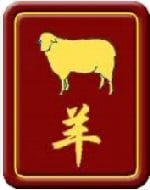
The date for the Chinese New Year in 2015 is February 19th. Incidentally, February 19th is about the latest possible date for the Chinese New Year.
The Chinese Calendar 2015
2015 is the year of the Sheep, but is also know as the year of the Goat, or even the Ram. It is the yĭ-wèi (乙未) year of the Wooden Sheep. Yĭ is the second of the ten celestial stems and wèi (Sheep) is the eighth of the twelve terrestrial branches.
Calculating ‘When is the Chinese New Year in 2015’
The fact that the date of Chinese New Year varies within about a month is a clue that it’s linked to the new moon. A rough, and almost infallible guide is that the Chinese New Year follows the second new moon after the winter solstice. The winter solstice always falls on December 21st, the next new moon is on January 20th 2015, and the second new moon is on February 18th 2015.
Please note that there is a new moon on December 21st, but this does not count for calculation purposes. However, this does mean that February 19th is about the latest day in the year for the Chinese New Year. As the new year ends on February 7th 2016 this late begining it makes 2015 slightly shorter than most Chinese ‘years’.
If the year ends in 0 it is Yang Metal.
If the year ends in 1 it is Yin Metal.
If the year ends in 2 it is Yang Water.
If the year ends in 3 it is Yin Water.
If the year ends in 4 it is Yang Wood.
If the year ends in 5 it is Yin Wood.
If the year ends in 6 it is Yang Fire.
If the year ends in 7 it is Yin Fire.
If the year ends in 8 it is Yang Earth.
If the year ends in 9 it is Yin Earth.
Chinese Idiom Story
There was a Chinese boy called Lěi, who had a large flock of sheep. But one day, Lěi lost a goat and didn’t take care of his fence. Gradually more goats escaped until, at last, there was only one goat left. Only then did Lěi realise the seriousness of his situation, and belatedly repaired the fence. From that moment, none of his sheep were ever lost.
Lěi’s story tells us that we must deal with matters in time, or we would lose a lot.
What Lěi Needed for His Sheep – Baa Codes!
Chinese Folk Tale: – Sòng Dìng Bó Sells a Ghost
The hero of the story, the redoubtable Sòng Dìng Bó, a guy with a love of learning and the martial arts, goes to visit a friend who lives outside his city wall. He enjoys himself and stays late. The friend advises him to stay over, because the road home has a reputation for being haunted by ghosts, but of course Sòng Dìng Bó will have none of this, and starts for home in the dark night.
Of course it’s not long before our hero does encounter a ghost, but not a clever one, because he thinks he might be a ghost. Sòng Dìng Bó has fun pretending to be a ghost, and even learns what ghosts are most afraid of: having people spit in their faces! Now you know why Chinese people love doing that so much!
Finally, with dawn breaking, the ghost is keen to be off, (seems like Chinese ghosts, just like their western cousins, prefer the dark night to the light of day.) But Sòng Dìng Bó holds on to it and won’t let it go, and then… *roll of drums*… the ghost turns into… a sheep!!
Sòng Dìng Bó is no fool, he knows it might turn back into a ghost, so he spits in its face and takes it to market and sells it.
Characteristics of Sheep People
- Sheep people simply seek peace. They are quiet and calm men and women
- They enjoy carrying on with life in their own individual way; they are happy to be in the middle of the actions rather than being leaders.
- Though shy by nature, they like to be in the company of others watching from the side-lines, allowing others to dazzle.
- They are highly creative, enjoying cultural activities, and focus their energy on artistic hobbies.
- Sheep often appear easy-going and relaxed, happy to be going with the flow, but inwardly can they can be anxious.
- Sheep are nurturers, this is one of the few feminine signs. They enjoy taking care of other people. Their personalities are quiet, reserved and soothing.
- Those born under the Sheep sign will do better than they realize, partly because they are so good at keeping the peace and partly because they are good at accomplishing the tasks at hand.
The characteristics of the Sheep are modified by one, or more, of these Chinese elements: Wood, Metal, Water, Fire and Earth.
Qualities of “Wood Sheep” People
Sheep enjoy being in the middle of a group, consequently, other flock to these Sheep, possibly because they are so compassionate and helpful.
Their sincerity can be taken advantage of and Wood Sheep may get their feelings hurt by undeserving sympathy seekers.
Sometimes, Wood Sheep need to suppress their caring ways and take care of themselves.
Likely Vocations for SheepTheir caring and artistic qualities, means that Sheep make excellent actors, designers, florists, paediatricians, hairdressers, musicians and teachers.
Sheep Show These Likes and Aversions
- Colour Preference: Cerise, mauve and pink.
- Gems and Stones: Jade, Moonstone and Sapphire.
- Leisure Activities: Reading, swimming, going to the theatre, eating and drinking.
- Sheep Dislike: Being away from their family and friends. They dislike arguments or conflict.
People Born in the Year of the Sheep Michelangelo, King George VI, Jane Austen, Boris Becker, Jamie Foxx, Mel Gibson, Franz Liszt, Michelangelo, Mark Twain, Barbara Walters, Orville Wright and Rudolph Valentino.
‘When is the Chinese Valentine’s Day in 2015?’, is sure to be a question in quiz. So be prepared, know the date, and remember the golden rule, 7th day of the 7th month of the Chinese calendar.
Chinese Phrases
干净免费笑话,故事图片、视频剪辑 means clean free jokes, stories pictures and video-clips.
Will and Guy’s Amusing and Funny Chinese Fishing Story
Wang Chien-Ming, (王建 in Mandarin), having settled down to fish at the edge of the river in Guangdong province, soon realized that he had forgotten to bring any bait.
Slightly annoyed with himself, Wang noticed a little snake passing by who had caught a worm. Knowing it was the year of the snake, Wang grabbed the snake and robbed him of his worm. Then later, feeling sorry for the little snake with no lunch, he snatched him up again and poured a little beer down his throat. Then he continued happily with his fishing.
An hour or so later Wang felt a tug at his trouser leg. Looking down, he saw the same snake with three more worms in his mouth………………
Please write to Will and Guy if you have any interesting stories about the Chinese New Year 2015.
Year of the Goat (2015)
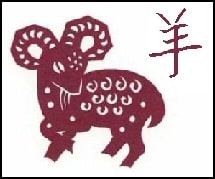
The Chinese New Year begins on February 19th in 2016 and ends on February 7th 2016.
The Chinese Calendar 2015
2015 is the year of the Goat, and is also know as the year of the Sheep. It is the yĭ-wèi (乙未) year of the Wooden Goat. Yĭ is the second of the ten celestial stems and wèi (Sheep) is the eighth of the twelve terrestrial branches.
Chinese calendar has names that are repeated every 60 years. Within this ‘Stem-Branch’ date system, is a shorter cycle of 12 years denoted by these animals:
Rat Ox Tiger Rabbit Dragon Snake Horse Goat Monkey Rooster Dog Pig
Calculating ‘When is the Chinese New Year in 2015’
The date of Chinese New Year varies within about a month, this is a sure sign that it’s linked to the moon. As a guide the Chinese New Year follows the second new moon after the winter solstice. As the winter solstice falls on December 21st 2014, the next new moon is on January 20th 2015, and the second new moon is on February 18th 2015.
While there is a new moon on December 21st, it does not count for determining the New Year. What this does mean that February 19th is about the latest day in the year that Chinese New Year could occur. As the new year ends on February 7th 2016 it makes it slightly shorter than most Chinese ‘years’.
The lunar Chinese New Year (CNY) calendar below shows which of 12 animals you are! Naturally the animal depends on the year in which you were born. Note: if you were born in January or February you need to check if your birthday was before or after the date of that Chinese New Year. Because if it was before this day your animal is the one shown for the previous year.
Rat Ox Tiger Rabbit Dragon Snake Horse Goat Monkey Rooster Dog Pig
If the year ends in 0 it is Yang Metal.
If the year ends in 1 it is Yin Metal.
If the year ends in 2 it is Yang Water.
If the year ends in 3 it is Yin Water.
If the year ends in 4 it is Yang Wood.
If the year ends in 5 it is Yin Wood.
If the year ends in 6 it is Yang Fire.
If the year ends in 7 it is Yin Fire.
If the year ends in 8 it is Yang Earth.
If the year ends in 9 it is Yin Earth.
Chinese Idiom Story
There was a Chinese boy called Lěi, who had a large flock of sheep. But one day, Lěi lost a sheep and didn’t take care of his fence. Gradually more sheep escaped until, at last, there was only one sheep left. Only then did Lěi realise the seriousness of his situation, and belatedly repaired the fence. From that moment, none of his sheep were ever lost.
Lěi’s story tells us that we must deal with matters in time, or we would lose a lot.
Qualities of “Wood Goat” People
Goats enjoy being in the middle of a group, consequently, other flock to these Goats, possibly because they are so compassionate and helpful.
Their sincerity can be taken advantage of and Wood Goat may get their feelings hurt by undeserving sympathy seekers.
Sometimes, Wood Goat need to suppress their caring ways and take care of themselves.
Likely Vocations for GoatsTheir caring and artistic qualities, means that Goats make excellent actors, designers, florists, paediatricians, hairdressers, musicians and teachers.
Goats Show These Likes and Aversions
- Colour Preference: Cerise, mauve and pink.
- Gems and Stones: Jade, Moonstone and Sapphire.
- Leisure Activities: Reading, swimming, going to the theatre, eating and drinking.
- Goats Dislike: Being away from their family and friends. They dislike arguments or conflict.
People Born in the Year of the Goat Michelangelo, King George VI, Jane Austen, Boris Becker, Jamie Foxx, Mel Gibson, Franz Liszt, Mark Twain, Barbara Walters, Orville Wright and Rudolph Valentino.
Chinese Proverbs
20 Number 6
Enigmatic Chinese Proverbs
- With a good wife, the husband won’t get in trouble; a bad wife is worse than a dog.
- The parental love for children is lengthy like the stream, but the children only think of the parents like the wind on the edge of a tree.
- A hedge between keeps friendship green.
- Do not remove a fly from your friend’s forehead with a hatchet.
- Happiness is something to do, something to love, something to hope for.
- If you are patient in one moment of anger, you will escape a hundred days of sorrow.
- Make happy those who are near, and those who are far will come.
‘When is the Chinese Valentine’s Day in 2015?’, is sure to be a question in quiz. So be prepared, know the date, and remember the golden rule, 7th day of the 7th month of the Chinese calendar.
Please write to Will and Guy if you have any interesting stories about the Chinese New Year 2015 – The year of the Goat.
Year of the Monkey (2016)
The date for the Chinese New Year in 2016 is February 8th. This is the year of the Fire Monkey.
The Chinese Calendar 2016
2016 is the year of the Monkey. It is the Fire Hóu (火 猴) year of the Fire Monkey. Fire is the third of the ten celestial stems and 猴 Hóu (Monkey) is the ninth of the twelve terrestrial branches.
Unlike western calendars, the Chinese calendar has names that are repeated every 60 years. Within the ‘Stem-Branch’ system is shorter cycle of 12 years denoted by animals:
Rat Ox Tiger Rabbit Dragon Snake Horse Sheep Monkey Rooster Dog Pig
2008 2009 2010 2011 2012 2013 2014 2015 2016 2017 2018 2007
Calculating ‘When is the Chinese New Year in 2016’
The fact that the date of Chinese New Year varies within about a month is a clue that it’s linked to the new moon. A rough, and almost infallible guide is that the Chinese New Year follows the second new moon after the winter solstice. The winter solstice always falls on December 21st, the next new moon is on January 10th 2016, and the second new moon is on February 8th 2016.
Year of the Monkey
The monkey ranks ninth of all the animals in the Chinese zodiac. The monkey is a clever animal and is frequently compared to a smart person. Pictures of monkeys are often placed on walls and doors to bring good fortune.
Characteristics of Monkey People
- People born in the year of the monkey are lively, flexible, witty and versatile with strong practical ability.
- They love to be active and they enjoy sports.
- Often highly intelligent, they are talented problem solvers, and are self-assured, sociable and innovative.
- They love being the centre of attention and have a magnetic personality.
- Monkey people have an insatiable desire for knowledge and show amazing creativity in their work.
- They like challenges and love to succeed, although they can be discouraged if things don’t go their way.
- Monkeys are mischievous; they are masters of the practical joke (though they can sometimes take things too far)
- They tend to be healthy (probably due to their active lifestyle) but should remember to take a break from their busy schedule now and again.
- Negative traits are that they can be jealous, suspicious, cunning, arrogant and impatient, and tend to look down on others.
Fire Monkey
2016 is the Year of the Fire Monkey, fire being the dominant element this year. (the other elements are wood, metal, water and earth)
Fire brings huge energy and determination to the Monkeys. They strive to gain the upper hand and like nothing better than to be at the top of the tree. Being recognised for their achievements gives them greater job satisfaction than money.
In business they are good negotiators, persuasive and organised, but can get ‘burnt’ by taking risky shortcuts.
Fire monkey women, will be willing to give up their own wealth or dreams to raise their family and to ensure their spouse and children are successful.
Fire Monkeys should remember that there is a saying in China: “The further up the tree a Monkey goes, the more you see his bottom.” If they use their talents and energy well, they can be extremely successful and popular with all.
Lucky colours: white, gold, blue. Avoid red, black.
Lucky numbers: 1, 8, 7 Avoid 9, 2, 5
Lucky flower: chrysanthemum
Compatibility: rat or dragon. Avoid tiger or pig.
Famous People Born in the Year of the Monkey
Leonardo da Vinci, Charles Dickens, George Gordon Byron, Alexander Dumas, Yao Ming, Celine Dion, Tom Hanks, Will Smith, Halle Berry, Christina Aguilera, Diana Ross, Elizabeth Taylor, Michael Douglas, Owen Wilson, Daniel Craig, Mick Jagger, Julius Caesar, Bette Davis, Annie Oakley, Eleanor Roosevelt, Harry S Truman, Captain Cook, Cuba Gooding Jr., Patricia Arquette, Alyson Stoner, Christina Ricci, Mitchell Musso, Nick Jonas, Selena Gomez, Empress Wu Zetian of China’s Tang Dynasty (618 – 907)
Monkey Jokes
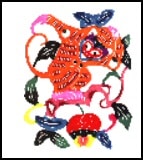
- Why did the monkey like the banana?
Because it had appeal! - What do monkeys do for laughs?
They tell jokes about people! - What do you call a 2,000 pound gorilla?
Sir! - Where should a monkey go when he loses his tail?
To a retailer! - Why don’t monkeys play cards in the jungle?
There are too many cheetahs there!
More Monkey One-liners to Drive you Crackers
- Where do chimps get their gossip?
On the ape vine! - What key won’t open any door?
A monkey! - How do monkeys get down the stairs?
They slide down the banana-ster! - Where does a 2,000 pound gorilla sit?
Anywhere it wants! - Josh: I taught my monkey to play chess.
Betty: She must be very smart.
Josh: Not really, I beat her two games out of three!
The Chinese New Year Calendar – With Its Associated 12 Animals
The lunar Chinese New Year (CNY) calendar below shows which of 12 animals you are! Naturally the animal depends on the year in which you were born. Note: if you were born in January or February you need to check if your birthday was before or after the date of that Chinese New Year. (If it was before this day your animal is the one shown for the previous year).
60 Year Cycle of the Chinese New Year Calendar
Unlike western calendars, the Chinese calendar has names that are repeated every 60 years. Within the ‘Stem-Branch’ system is shorter ‘Celestial’ cycle of 12 years denoted by animals. Furthermore, the Chinese believe that people born in a particular year take on the characteristics of the animal associated with that year.
Rat Ox Tiger Rabbit Dragon Snake Horse Sheep Monkey Rooster Dog Pig
2008 2009 2010 2011 2012 2013 2014 2015 2016 2017 2018 2007
Another dimension of the Chinese zodiac is the 5 ‘Terrestrial’ elements of metal, water, wood, fire and earth.
If the year ends in 0 it is Yang Metal.
If the year ends in 1 it is Yin Metal.
If the year ends in 2 it is Yang Water.
If the year ends in 3 it is Yin Water.
If the year ends in 4 it is Yang Wood.
If the year ends in 5 it is Yin Wood.
If the year ends in 6 it is Yang Fire.
If the year ends in 7 it is Yin Fire.
If the year ends in 8 it is Yang Earth.
If the year ends in 9 it is Yin Earth.
Start date for the Chinese New Year Calendar 2014 and following years
The lunar Chinese New Years dates are:
2014 – Jan 31; 2015 – Feb 19; 2016 Feb 8th; 2017; Jan 28th.
Dates for Chinese Valentine’s Day
‘When is the Chinese Valentine’s Day in 2016?’, is sure to be a question in quiz. So be prepared, know the date, and remember the golden rule, 7th day of the 7th month of the Chinese calendar. 9th August 2016. Qīxī Jié (七夕節).
Chinese Phrases
搞笑清洁笑话 in Chinese roughly translates into clean funny jokes.
干净免费笑话,故事图片、视频剪辑 means clean free jokes, stories pictures and video-clips.
More Monkey Jokes
A young pet monkey had an accident and needed a brain transplant. The veterinarian told the monkey’s human family, “Brains are very expensive, and you will have to pay the cost yourselves.”
“Well, how much does a brain cost?” asked the family.
“For a male brain, $500,000. For a female brain, $200,000,” replied the vet.
All the men in the family nodded because they thought they understood. But the mother was unsatisfied and asked, “Why the difference in price between male and female brains?”
“Standard pricing practice,” said the vet. “The female brains have to be marked down because they’ve actually been used!”.
Space Monkeys
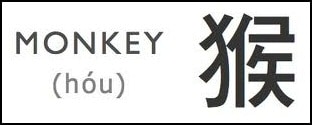
NASA decided to send a shuttle into space with two monkeys and an astronaut on board. After months of training, they placed all three in the shuttle and prepared for launch.
Mission Control Center announced, “This is Mission Control to Monkey One. Do your stuff.”
The first monkey began frantically typing and the shuttle took off.
Two hours later, NASA’s mission control center announced, “This is Mission Control to Monkey Two. Do your stuff.”
The second monkey started typing like mad and the shuttle separated from the empty fuel tanks.
Another two hours later Mission Control Center announced, “This is Mission Control to Astronaut … “
At this, the astronaut shouted “I know, I know – feed the monkeys and don’t touch anything.”
Please write to Will and Guy if you have any interesting stories about the Chinese New Year 2016.
Year of the Rooster (2017)
The date for the Chinese New Year in 2017 is January 28th. This is the year of the Fire Monkey.
The Chinese Calendar 2017
2017 is the year of the Rooster. To be precise, this is the year of the Fire Rooster ‘Ding You’ 丁酉. Fire being the fourth of the ten celestial stems and 猴 You (Rooster) is the tenth of the twelve terrestrial branches.
Unlike western calendars, the Chinese calendar has names that are repeated every 60 years. Within this ‘Stem-Branch’ system is shorter cycle of 12 years denoted by these animals:
Calculating ‘When is the Chinese New Year in 2017’
The fact that the date of Chinese New Year varies within about a month is a clue that it’s linked to the new moon. As an almost infallible guide the Chinese New Year follows the second new moon after the winter solstice. The winter solstice always falls on December 21st, the next new moon is eight days later on December 29th 2016, and the second new moon is on January 28th 2017.
Year of the Fire Roosters (2017)
The rooster ranks tenth of all the animals in the Chinese zodiac. The rooster is a clever animal who is frequently compared to a smart person. Image is all important to the Fire Rooster; he spends a lot of time making himself look good, making him appear vain. He is flaunty and dramatic, yet he is a brilliant social organizer who loves to plan parties and gatherings.
Fire Roosters tend to be bossy and this, combined with their bluntness, can cause hurt feelings and bruised egos amongst colleagues. Still, these Roosters make great leaders, who are creative, diligent and motivated.
Likely Vocations for Rooster people: Roosters are more motivated than any other animal in the Chinese Zodiac. They are multi-talented. Good career choices are: trouble-shooter, detective, doctor, surgeon, psychiatrist, actor, dancer, musician, restaurateur, publicist, travel writer, journalist, soldier, athlete, teacher, police officer, book keeper, accountant.
The Rooster’s blunt manner and direct approach to life makes them poor diplomats. Rooster women are devoted to duty and seldom boast. They have exceptional vitality and patience and do well in jobs requiring carefulness and flexibility, like social work and teaching.
Rooster’s likes and aversions:
- Colours: gold, brown, yellow, peach. Avoid: white, green.
- Numbers: 5, 7, 8. Avoid: 3, 9, 1.
- Flowers: gladioli, cockscomb, impatiens.
- Gems: diamond, ruby, topaz.
Compatible with: Ox, Dragon, Snake. Avoid: Rabbit, Rat, and Dog. Hobbies: fishing, gardening, climbing, swimming, hiking.
Famous People Born in the Year of the Rooster
Elton John, Bette Midler, Rudyard Kipling, Caruso, Groucho Marx, and Peter Ustinov, Justin Timberlake, Roger Federer, Serena Williams, Cate Blanchett, Catherine the Great, Amelia Earhart, Mo-tse, Liu Che (Emperor Wu of China’s Western Han Dynasty 202 BC – 9 AD), Li Longji (Emperor Xuanzong of China’s Tang Dynasty 618 – 907), Zhuge Liang (Premier of Shu in China’s Three Kingdoms Period 220 – 280)
If the year ends in 0 it is Yang Metal.
If the year ends in 1 it is Yin Metal.
If the year ends in 2 it is Yang Water.
If the year ends in 3 it is Yin Water.
If the year ends in 4 it is Yang Wood.
If the year ends in 5 it is Yin Wood.
If the year ends in 6 it is Yang Fire.
If the year ends in 7 it is Yin Fire. If the year ends in 8 it is Yang Earth.
Start date for the Chinese New Year Calendar 2014 and following years
The lunar Chinese New Years dates are:
2014 – Jan 31; 2015 – Feb 19; 2016 Feb 8th; 2017; Jan 28th.
‘When is the Chinese Valentine’s Day in 2017?’, is sure to be a question in quiz. So be prepared, know the date, and remember the golden rule, 7th day of the 7th month of the Chinese calendar. 28th August 2017. Qīxī Jié (七夕節).
Chinese Phrases
干净免费笑话,故事图片、视频剪辑 means clean free jokes, stories pictures and video-clips.
Rooster Jokes
How do you stop a rooster crowing on a Sunday?
Eat him on a Saturday.
Q: Why did the rooster cross the road?
A: To cockadoodle dooo something!
Q: Why did the rooster run away?
A: He was chicken!
Q: Why did the rooster cross the basketball court?
A: He heard the referee calling fowls
Q: What do you call a rooster who wakes you up at the same time every morning?
A: An alarm cluck!
Q: Why did the rooster get a tattoo?
A: He wanted to impress the chicks!
Movies
A man in a movie theater notices what looks like a rooster sitting next to him.
“Are you a rooster?” asked the man, surprised.
“Yes.”
“What are you doing at the movies?”
The rooster replied, “Well, I liked the book.”
Religious Cowboy
The devout cowboy lost his favourite Bible while he was mending fences out on the range. Three weeks later, a rooster walked up to him carrying the Bible in its mouth.
The cowboy couldn’t believe his eyes. He took the precious book out of the rooster’s beak, raised his eyes heavenward and exclaimed, “It’s a miracle!”
“Not really,” said the rooster. “Your name is written inside the cover.”
Rooster Proverbs
- Sad is the house where the hen crows and the rooster is silent! (chinese proverb)
- The rooster makes all the noise, but the hen rules the roost!
- The rooster may rule the roost, but the hen rules the rooster!
- The rooster may crow, but this hen lays the egg!
- If you were born lucky, even your rooster will lay eggs. ( Russian Proverb)
Run-over the Rooster
A man was driving down a quiet country lane when out into the road strayed a rooster. Whack! The rooster disappeared under the car. A cloud of feathers.
Shaken, the man pulled over at the farmhouse, rang the door bell. A farmer appeared. The man, somewhat nervously said, “I think I killed your rooster, please allow me to replace him.”
“Suit yourself,” the farmer replied, “you can go join the other chickens, they’re around the back.”
It’s been a tough year, but I’ve made it so far!
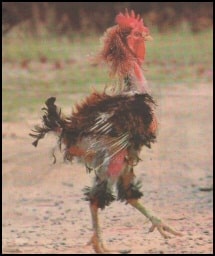
But not everyone is as lucky as I am……
Chinese Chicken Cheats Cooker
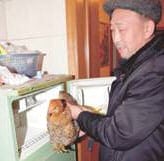
Gan Shugen took a chicken out of the freezer after two days and was shocked to find it was still alive. Gan Shugen, of Chengdu city, China, says the hen was a gift from a relative, reports Chengdu Evening News. It was wrapped in a thick plastic bag with its legs bound so, assuming it was dead, Gan put it straight in the freezer.
Two days later, when he opened the freezer, he was amazed by what he saw. ‘I heard weak sounds, and when I opened the bag, a red head popped out,’ he said. ‘It was still warm, and when I removed the tape, she could stand.’
Li Fazhi, of the Chinese Association of Animal and Veterinary Sciences, said he was mystified and added, ‘If the hen was locked in a fridge, that’s still amazing; but if she survived in a freezer for two days, that’s magic,’ he said. Gan has said that he will not eat the chicken but look after it in his home.
Please write to Will and Guy if you have any interesting stories about the Chinese New Year 2017.