
Will and Guy Take A Look At Diwali Humour
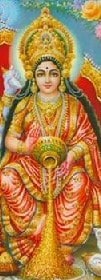
Diwali, this Hindu festival of lights is held 15 days from the full moon of Kartik. Here is a selection of jokes and funny pictures to celebrate the festival.
The Funny Flight
Madhul was flying home to see her family to celebrate Diwali with them. Fifteen minutes into the flight from Bombay to Delhi, the captain announced, ‘Ladies and gentlemen, one of our engines has failed. There is nothing to worry about. Our flight will take an hour longer than scheduled, but we still have three engines left.’
Thirty minutes later the captain announced, ‘One more engine has failed and the flight will take an additional two hours. But don’t worry… we can fly just fine on two engines.’
An hour later the captain announced, ‘One more engine has failed and our arrival will be delayed another hour. But don’t worry… we still have one engine left.’
Madhul, turned to the man in the next seat and sighed and she said, ‘If we lose one more engine, we’ll be up here all day.’
A Funny Enquiry
Gajendra ‘phones Air India, ‘How long does it take to fly to Amritsar?’
‘Just a sec,’ answers the rep.
‘Thank you,’ says Gajendra and hangs up.
The Funny Gambler
On the eve of Diwali a blackjack dealer and Damodar, a player who is holding cards adding to 13 were arguing about whether or not it was appropriate to tip the dealer.
Damodar said, ‘When I get bad cards, it’s not the dealer’s fault. Accordingly, when I get good cards, the dealer obviously had nothing to do with it so, why should I tip him?’
The dealer argued, ‘When you eat out do you tip the waiter?’
‘Of course,’ replied Damodar.
”Well then, he serves you food, I’m serving you cards so you should tip me.’
‘OK, but, the waiter always gives me what I ask for. Give me an eight to make blackjack,’ concluded Damodar.
Diwali Celebrations!
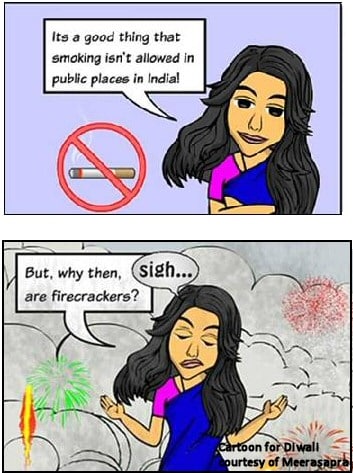
Funny Diwali Cartoon courtesy of Meerasapra
Inglish Jokes
Dear sir, with reference to your above, see my below – popular opening line in official letters.
- Teachress – a female teacher.
- She freaked out last night – she had a good time.
- Hue and Cry notice – title of police missing person newspaper advertisement.
1) The Killing of the Demon Narakaasura
The demon Narakaasura was the evil king of Pragjyotishpur, near Nepal. He ruled with a reign of terror, abducted 16,000 daughters of the gods and stole the earrings of Aditi, mother of the gods.
The gods asked Lord Krishna for help and, after a mighty battle, he killed the demon, freed the girls and recovered the earrings.
The rescue of the 16,000 girls is said to be the origin of the story that Krishna had 16,000 wives.
After his victory Krishna returned very early in the morning and was bathed and massaged with scented oils.
- Taking an early morning bath with oil is still a Diwali tradition.
2) The Killing of the Demon Ravana
Ravana, who had ten arms and ten heads, was the wicked king of the island of Sri Lanka, who kidnapped the wife of Rama. Rama had been in exile for 14 years because of a disagreement as to whether he or his brother should be the next king in Ayodhya.
After a great battle Rama killed the demon and recovered his wife. Rama’s return with his wife Sita to Ayodhya and his subsequent coronation as king is celebrated at Diwali.
When Rama and Sita first returned to Ayodhya it was a dark moonless night and they couldn’t see where they were going. Their people put little lamps outside their houses so that the new king and queen could find their way.
- This was the beginning the tradition of the festival of lights.
3) The Legend of Dhanteras [Dhanteras is the first day of the five-day Diwali Festival]
A particularly lovely story which Will and Guy have learned about, is about the sixteen year old son of King Hima. According to astrology he was doomed to die by a snake-bite on the fourth day of his marriage.
On that particular fourth day of his marriage his young wife did not allow him to sleep. She laid all the ornaments and lots of gold and silver coins in a big heap at the entrance of her husband’s bedroom and lit innumerable lamps all over the place. She proceeded to tell stories and sing songs, determined to do so all through the night.
When Yam, the god of Death arrived there in the guise of a serpent his eyes got blinded by that dazzle of those brilliant lights and he could not enter the Prince’s chamber. So he climbed on top of the heap of the ornaments and coins and sat there whole night listening to the beautiful and melodious songs. In the morning he quietly went away.
Thus the young wife saved her husband from the clutches of death. Since then this day of Dhanteras came to be known as the day of “Yamadeepdaan” and lamps are kept burning throughout the night in reverential adoration to Yam, the god of Death.
4) The Legend of King Bali
Another enjoyable legend is that of King Bali of the underworld; his mighty power had become a threat to the gods who were gravely concerned.
In order to curb his powers Lord Vishnu in the guise of a “Batu Waman”, a small boy, visited him and begged him to give him only that much land which he could cover with his three steps.
Known for his philanthropy, King Bali proudly granted him his wish. That very moment that small boy transformed himself into the all-powerful Lord Vishnu.
With his first step Lord Vishnu covered the entire heaven and with the second step the earth and asked Bali where to keep his third step. Bali offered his head. Putting his foot on his head Vishnu pushed him down to the underworld.
At the same time for his generosity, Lord Vishnu gave him the lamp of knowledge and allowed him to return to earth once a year to light millions of lamps to dispel darkness and ignorance and spread the radiance of love and wisdom.
Background to Diwali
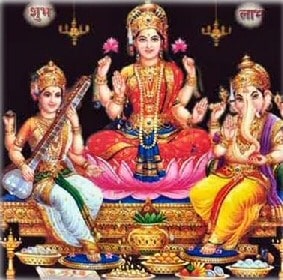
The festival celebrates the victory of good over evil, light over darkness and knowledge over ignorance, although the actual legends that go with the festival are different in different parts of India.
Lord Vishnu with his consort Lakshmi – see right.
When is Dwali? – Dates
2010 5th November, Friday
2011 26th October, Wednesday
2012 13th November, Tuesday
2013 3rd November, Sunday
2014 23rd October, Thursday
2015 11th November, Wednesday
2016 30th October, Sunday
2017 19th October, Thursday
2018 7th November, Wednesday
2019 27th October, Sunday
See the Indian festivals of Nirvana, Kumbh Mela, Magh Mela and India Day
Will and Guy Wish You A Happy Diwali
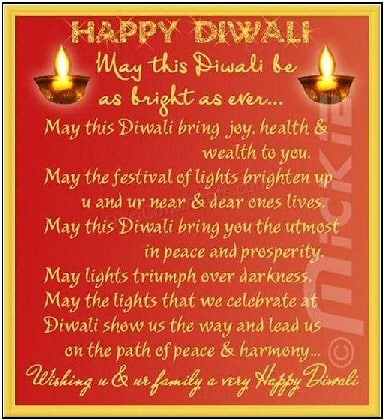
Please send us your Diwali jokes and funny stories.
Diwali 2010 – Hindu Festival
Will and Guy Take A Look At Diwali 2010
Diwali 2010 is on Friday the 5th November. This Hindu festival of lights is held 15 days after the full moon of Kartik.
Diwali 2010
The festival celebrates the victory of good over evil, light over darkness and knowledge over ignorance, although the actual legends that go with the festival are different in different parts of India.
The Traditional Five Days of Diwali Include these Special Events
- On the first day of Diwali, housewives consider it auspicious to spring clean the home and shop for gold or kitchen utensils.
- On the second day, people decorate their homes with clay lamps or “diyas” and create design patterns called *”rangoli” on the floor using coloured powders or sand.
- This is the main day of the festival when families gather together for “Lakshmi puja”, a prayer to Goddess Lakshmi followed by mouth-watering feasts and firework festivities.
- This is the first day of the new year when friends and relatives visit with gifts and best wishes for the season.
- On the last day of Diwali, brothers visit their married sisters who welcome them with love and a lavish meal.
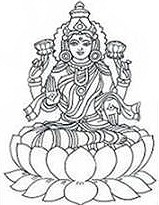
*Example of a rangoli pattern, see right.
Lakshmi – Consort of the God Vishnu
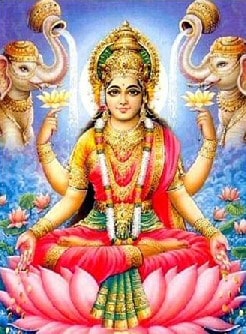
Lakshmi is the consort of the god Vishnu. She is considered to be one of the most popular goddesses of Hindu mythology and is known as the goddess of wealth and purity. Lakshmi is commonly portrayed as a beautiful woman with four arms, standing on a lotus flower. There is usually one, or sometimes two elephants behind her, anointing her with water. She is often depicted sitting beneath Vishnu, massaging his feet.
Hindus believe that anybody who worships Lakshmi sincerely, and not in greed, will be blessed with fortune and success. It is said that Lakshmi resides in places of hard work, virtue and bravery, but leaves whenever these qualities are not apparent any more.
Lakshmi is particularly worshipped during the festival of Diwali.
When is Dwali? – Dates
2010 5th November, Friday
2011 26th October, Wednesday
2012 13th November, Tuesday
2013 3rd November, Sunday
2014 23rd October, Thursday
2015 11th November, Wednesday
2016 30th October, Sunday
2017 19th October, Thursday
2018 7th November, Wednesday
2019 27th October, Sunday
See the Indian festivals of Nirvana, Kumbh Mela, Magh Mela and India Day
When and What is Diwali?
Hindus calculate the the date of Diwali as 15 days from the full moon of Kartik. Thus Diwali falls on the amavasya or the no moon day. Incidentally, this is 20 days after Dussehra (Vijaya Dashmi).
Diwali (also spelt Divali in other countries) or Dīpāvali (Tamil: தீபாவளி, Gujarati: દિવાળી, Hindi: दिवाली, Kannada: ದೀಪಾವಳಿ, Konkani: धाकली दिवाळी, Malayalam: ദീപാവലി, Marathi: दिवाळी, Nepali: दिपावली, Oriya: ଦୀପାବଳୀ, Sanskrit: दीपावली, Telugu: దీపావళి, Urdu: دیوالی), also popularly known as the Festival of Lights, is an important 5-day festival in Hinduism, Sikhism and Jainism, occurring between mid-October and mid-November. Diwali is an official holiday in India [1], Guyana, Trinidad & Tobago, Malaysia, Nepal, Singapore, Sri Lanka and Fiji.
The name Diwali is itself a contraction of the word Dīpāvali दीपावली (Dīpāvali), which translates into row of lamps (din Sanskrit)[2]. Diwali involves the lighting of small clay lamps (divas) (or Deep in Sanskrit: दीप) filled with oil to signify the triumph of good over evil. During Diwali celebrants wear new clothes and share sweets and snacks with others. Some Indian business communities begin the financial year on the first day of Diwali wishing for good luck the following year.
In Hinduism, Diwali marks the return of Lord Rama to his kingdom of Ayodhya after defeating (the demon king) Ravana, the ruler of Lanka in the epic Ramayana. It also celebrates the slaying of the demon king Narakasura by Lord Krishna. Both signify the victory of good over evil. In Jainism, Diwali marks the attainment of moksha by Mahavira in 527 BC.[3][4] In Sikhism, Diwali commemorates the return of Guru Har Gobind Ji to Amritsar after freeing 52 Hindu kings imprisoned in Fort Gwalior by Emperor Jahangir; the people lit candles and divas to celebrate his return, which is why Sikhs also refer to Diwali as Bandi Chhorh Divas, “the day of release of detainees”. Diwali is considered a national festival in India and Nepal.
Diwali Festival of Lights in the UK
In Britain, as in India, the festival of lights is a time for thoroughly spring-cleaning the home, wearing new clothes and most importantly, decorating buildings with fancy lights. The English city of Leicester is noted particularly for its Diwali celebrations.
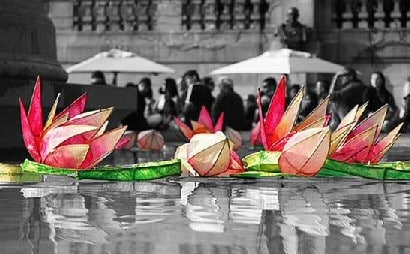
Diwali Lanterns photographed in Trafalgar Square, London, England
The Killing of the Demon Ravana
Ravana, who had ten arms and ten heads, was the wicked king of the island of Sri Lanka, who kidnapped the wife of Rama. Rama had been in exile for 14 years because of a disagreement as to whether he or his brother should be the next king in Ayodhya.
After a great battle Rama killed the demon and recovered his wife. Rama’s return with his wife Sita to Ayodhya and his subsequent coronation as king is celebrated at Diwali.
When Rama and Sita first returned to Ayodhya it was a dark moonless night and they couldn’t see where they were going. Their people put little lamps outside their houses so that the new king and queen could find their way.
- This was the beginning the tradition of the festival of lights.
The Legend of King Bali
Another enjoyable legend is that of King Bali of the underworld; his mighty power had become a threat to the gods who were gravely concerned.
In order to curb his powers Lord Vishnu in the guise of a “Batu Waman”, a small boy, visited him and begged him to give him only that much land which he could cover with his three steps.
Known for his philanthropy, King Bali proudly granted him his wish. That very moment that small boy transformed himself into the all-powerful Lord Vishnu.
With his first step Lord Vishnu covered the entire heaven and with the second step the earth and asked Bali where to keep his third step. Bali offered his head. Putting his foot on his head Vishnu pushed him down to the underworld.
At the same time for his generosity, Lord Vishnu gave him the lamp of knowledge and allowed him to return to earth once a year to light millions of lamps to dispel darkness and ignorance and spread the radiance of love and wisdom.
The Funny Flight
Madhul was flying home to see her family to celebrate Diwali with them. Fifteen minutes into the flight from Bombay to Delhi, the captain announced, ‘Ladies and gentlemen, one of our engines has failed. There is nothing to worry about. Our flight will take an hour longer than scheduled, but we still have three engines left.’
Thirty minutes later the captain announced, ‘One more engine has failed and the flight will take an additional two hours. But don’t worry.. .we can fly just fine on two engines.’
An hour later the captain announced, ‘One more engine has failed and our arrival will be delayed another hour. But don’t worry… we still have one engine left.’
Madhul, turned to the man in the next seat and sighed and she said, ‘If we lose one more engine, we’ll be up here all day.’
Will and Guy Wish You A Happy Diwali
Please send us your Diwali stories.