
1) Check out the size of the hailstones
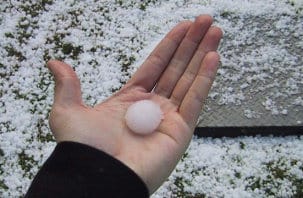
Hailstones as big as golf balls.
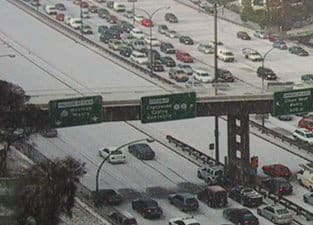
2) Effect of hailstorm on Sydney traffic
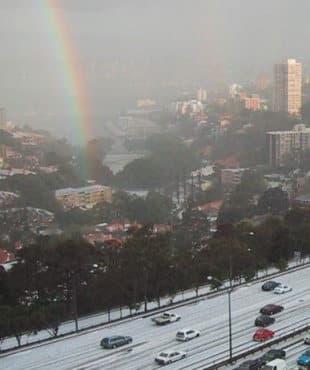
3) Hailstorm end in style – with a rainbow
Amazing PowerPoint Presentation – Pictures of Hailstones

More Hailstone Pictures
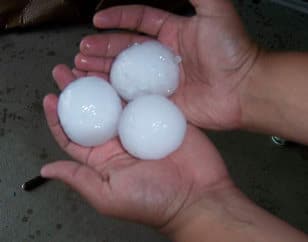
Hailstone formation
Hailstones are often associated with thunderstorms. What seems to happen is that compacted snow is blown upwards as well as downwards, thus causing more compaction and ever larger stones. Such hailstones cannot defy gravity for ever and eventually they precipitate out of the clouds and fall to ground.
In spectacular thunderstorms, hailstones can grow as big as 12 cm before dropping out of the cloud. Normally a hailstone is less than 2cm in diameter.
Surprisingly, the biggest hailstones fall not in Australia, not even in America, but in India.
Picture of Hailstone Hitting Windscreen
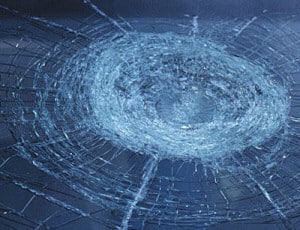

The damage caused by hailstones depends on their consistency; big soft stones are not as damaging as smaller, but solid hailstones. If you think about it, the bigger the hail the faster it can fall, thus bigger stones do more damage not just because of their size, but also because of their velocity.
Graupel hail is a term applied to hail that is made up lots of tiny balls that break up easily, see photograph to the right.
Megacryometeors
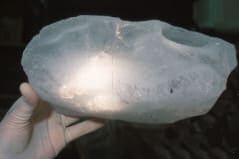
The word megacryometeor was introduced by Martinez-Frias and Travis in 2002. Megacryometeors are giant hailstones which are formed under unusual atmospheric conditions. They commonly reach 10 kilos (25lbs) and measure 20cms 8inches in diameter. It’s hard to believe, but one of 200 kilos was reported from Spain. Actually, Spain seems to attract more megacryometeors than anywhere else.
As more and more people become aware of these giant hailstones, so they keep them refrigerated until scientists arrive and measure them.
In addition to their huge size, megacryometeor are of interest because they may be an indicator of global warming. The simplistic argument goes that more and bigger the megacryometeors, the greater the indication of global warming.
Please send us your pictures of hailstones