Rosh Hashanah 2012 September 17th
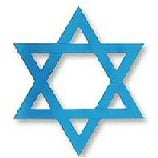
Rosh Hashanah is the Hebrew for “head of the year”, it marks the first day of the High Holidays or Yamim Noraim (“Days of Awe”). It starts in the evening before the day itself.
Rosh Hashanah – A Jewish Special Occasion
The Mishnah, the core work of the Jewish oral law, sets Rosh Hashanah aside as the new year for calculating calendar years and sabbatical and jubilee years. This holiday is part of the Yamim Noraim [Hebrew, “Days of Awe”]; the Yamim Noraim are a ten day period which begins with Rosh Hashanah, followed by the days of repentance, and end with the holiday of Yom Kippur.
Rosh Hashanah, the Jewish New Year, falls on the Hebrew calendar dates of 1 and 2 Tishrei, where Tishrei is the first month of the civil Jewish year. The first day of the seventh month of the ecclesiastical year is also the 1st of Tishrei or Rosh ha-Shanah. Since the Middle Ages Rosh Hashanah has been a two day festival, and the rules for calculating the start of the new civil year are such that Rosh Hashanah can never start on a Wednesday, Friday or Sunday.
Rabbinic literature describes this day as a day of judgement. God is sometimes referred to as the “Ancient of Days.” Some descriptions depict God as sitting upon a throne, while books containing the deeds of all humanity are opened before Him. Tishrei 1 corresponds to the sixth day of creation — “God said: ‘Let us make Man in Our image…’ ” (Genesis 1:26).
Here Are the Secular Dates for Rosh Hashanah
2010: September 9th until 10th (2 Tishrei)
2011: September 29th until 30th (2 Tishrei)
2012: September 17th until 18th (2 Tishrei)
2013: September 5th until 6th (2 Tishrei)
2014: September 25th until 26th (2 Tishrei)
2015: September 14th until 15th (2 Tishrei)
Note. The Jewish calendar date begins at sundown of the night beforehand, Will and Guy have learned. Thus all holiday observances begin at sundown on the secular dates listed, with the following day being the first full day of the holiday. Jewish calendar dates conclude at nightfall.
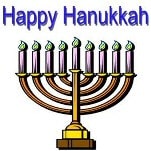
Ways of Celebrating the Special Holy Days of Rosh Hashanah
While there are elements of joy and celebration, Rosh Hashanah is a deeply religious occasion. The customs and symbols of Rosh Hashanah reflect the holiday’s dual emphasis, happiness and humility.
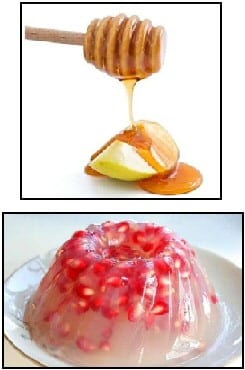
Rosh Hashanah, Will and Guy have been told is celebrated with sweet foods, like apples dipped in honey and honey cake, as a wish for a sweet year. Some families also celebrate with symbolic foods like the head of a fish, pomegranates, and carrots.
The head of a fish is so that we can be “like the head and not like the tail.” This is a symbol of having a year in which we are on top and not the bottom. Pomegranates are symbolic of plenty. We want plenty of health and happiness for the New Year, just as many good things as there are seed in a pomegranate. Thousands say Will and Guy.
Carrots are also eaten and it isn’t just to see better in the dark. For Ashkenazi Jews, carrots symbolize the Yiddish word “merren” which also means more. We want more of all the good things in life. More health, more happiness, more success. For Sephardic Jews, carrots are symbolic of the phrase “Yikaretu oyveychem” which means may your enemies be cut down. We ask that those who wish bad for us not get their wish, that they don’t succeed.
A shofar is a horn, traditionally that of a ram, which is used for Jewish religious purposes. Shofar blowing is incorporated in synagogue services on both Rosh Hashanah and Yom Kippur.
Jokes for Rosh Hashanah
Save Me LordDavid Greenbaum is a devoutly religious man who believes in the power of prayer. His house is caught in the rising waters of a devastating flood.
A row boat comes by to rescue him; he refuses it because he waits for his God to save him. As the waters rise Greenbaum climbs higher and higher up his house, refusing each successive boat that comes by.
Finally he drowns and goes to heaven. He complains bitterly to the Lord that he was such a good Jew and yet the Lord had forsaken him ‘How can you say that, David?’ the Lord retorts. ‘I sent four boats for you.’
A Priest and a Rabbi A priest and a rabbi are discussing the pros and cons of their various religions, and inevitably the discussion turns to repentance.
Rabbi Shimon Ben Gamliel explains Yom Kippur, the solemn Day of Atonement, a day of fasting and penitence, while the Father John tells him all about Lent, and its 40 days of self-denial and absolution from sins.
After the discussion ends, the rabbi goes home to tell his wife, Deborah, about the conversation, and they discuss the merits of Lent versus Yom Kippur.
Deborah turns her head and laughs.
The rabbi says, ‘What’s so funny, dear?’
Deborah’s response, ’40 days of Lent – one day of Yom Kippur…so, even when it comes to sin, the goyyim* pay retail…..’
*Goyyim is a term for a gentile or non-Jew.
Will and Guy are keen to learn more about Rosh Hashanah, so please send us your stories and interesting information.