
Here are funny mistranslated signs from around the world – Flesh Juice, Car Rectal Service and more – where one wrong letter changes everything.
Translating a sign into a foreign language is harder than it looks. Swap one letter or pick the wrong dictionary word and ‘Fresh Juice’ becomes ‘Flesh Juice’. These signs come from Asia, but English speakers are just as guilty – think of all the tattoos of Chinese characters that don’t mean what their owners think.
Flesh Juice

Car Rectal Service
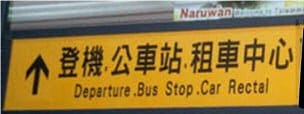
Businesses want to welcome international visitors, so they add an English version to their signs. Without a native speaker to check it, a small slip can produce a memorable phrase. We salute the effort – it’s more than most of us manage in a second language.
Auto Rock

More Funny Mistranslated Signs
- Flesh Juice (fresh juice)
- Please Do Not Spit Too Loud
- Do Not Grow Hand
- Sit On Crocodile
- Auto Rock (auto lock)
- Beware of People
- Car Rectal Service (car rental service)
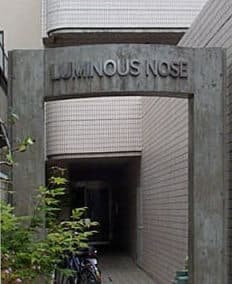
Luminous Nose – Nonsense Meets Mistranslation
The Dong with a Luminous Nose by Edward Lear
When awful darkness and silence reign
Over the great Gromboolian plain,
Through the long, long wintry nights;
When the angry breakers roar,
As they beat on the rocky shore;
When Storm-clouds brood on the towering heights
Of the Hills on the Chankly Bore:
Then, through the vast and gloomy dark,
There moves what seems a fiery spark,
A lonely spark with silvery rays
Piercing the coal-black night,
A meteor strange and bright:
Hither and thither the vision strays,
A single lurid light.
Slowly it wanders – pauses – creeps –
Anon it sparkles – flashes and leaps;
And ever as onward it gleaming goes
A light on the Bong-tree stem it throws.
And those who watch at that midnight hour
From Hall or Terrace, or lofty Tower,
Cry, as the wild light passes along, ‘The Dong! – the Dong!
The wandering Dong through the forest goes!
The Dong! the Dong!
The Dong with a luminous Nose!’
Long years ago
The Dong was happy and gay,
Till he fell in love with a Jumbly Girl
Who came to those shores one day.
For the Jumblies came in a Sieve, they did –
Landing at eve near the Zemmery Fidd
Where the Oblong Oysters grow,
And the rocks are smooth and gray.
And all the woods and the valleys rang
With the Chorus they daily and nightly sang –
‘ Far and few, far and few,
Are the lands where the Jumblies live;
Their heads are green, and their hands are blue,
And they went to sea in a Sieve.’
Happily, happily passed those days!
While the cheerful Jumblies staid;
They danced in circlets all night long,
To the plaintive pipe of the lively Dong,
In moonlight, shine, or shade.
For day and night he was always there
By the side of the Jumbly Girl so fair,
With her sky-blue hands, and her sea-green hair.
Till the morning came of that fateful day
When the Jumblies sailed in their Sieve away,
And the Dong was left on the cruel shore
Gazing – gazing for evermore –
Ever keeping his weary eyes on
That pea-green sail on the far horizon –
Singing the Jumbly Chorus still
As he sat all day on the grass hill –
‘Far and few, far and few,
Are the lands where the Jumblies live;
Their heads are green, and their hands are blue,
And they went to sea in a Sieve.’
But when the sun was low in the West,
The Dong arose and said, ‘What little sense I once possessed
Has quite gone out of my head!’ And since that day he wanders still
By lake and forest, marsh and hill,
Singing – ‘ O somewhere, in valley or plain
Might I find my Jumbly Girl again!
For ever I’ll seek by lake and shore
Till I find my Jumbly Girl once more!’ Playing a pipe with silvery squeaks,
Since then his Jumbly Girl he seeks,
And because by night he could not see,
He gathered the bark of the Twangum Tree
On the flowery plain that grows.
And he wove him a wondrous Nose,
A Nose as strange as a Nose could be!
Of vast proportions and painted red,
And tied with cords to the back of his head.
– In a hollow rounded space it ended
With a luminous lamp within suspended,
All fenced about
With a bandage stout
To prevent the wind from blowing it out;
And with holes all round to send the light,
In gleaming rays on the dismal night.
And now each night, and all night long,
Over those plains still roams the Dong!
And above the wail of the Chimp and Snipe
You may hear the wail of his plaintive pipe,
While ever he seeks, but seeks in vain,
To meet with his Jumbly Girl again;
Lonely and wild – all night he goes –
The Dong with a luminous Nose!
And all who watch at the midnight hour,
From Hall or Terrace, or Lofty Tower,
Cry, as they trace the Meteor bright,
Moving along through the dreary night, ‘This is the hour when forth he goes,
The Dong with the luminous Nose!
Yonder – over the plain he goes;
He goes;
He goes!
The Dong with a luminous Nose!’ Edward Lear


